
- Project: MM34 – Mar Mediterráneo 34
- Architect: Inca Hernandez Atelier
- Location: Mexico, Mexico City
- Year: 2022
- Area: 620 m2
- Photography: João Morgado
A New Life for a Historic Home
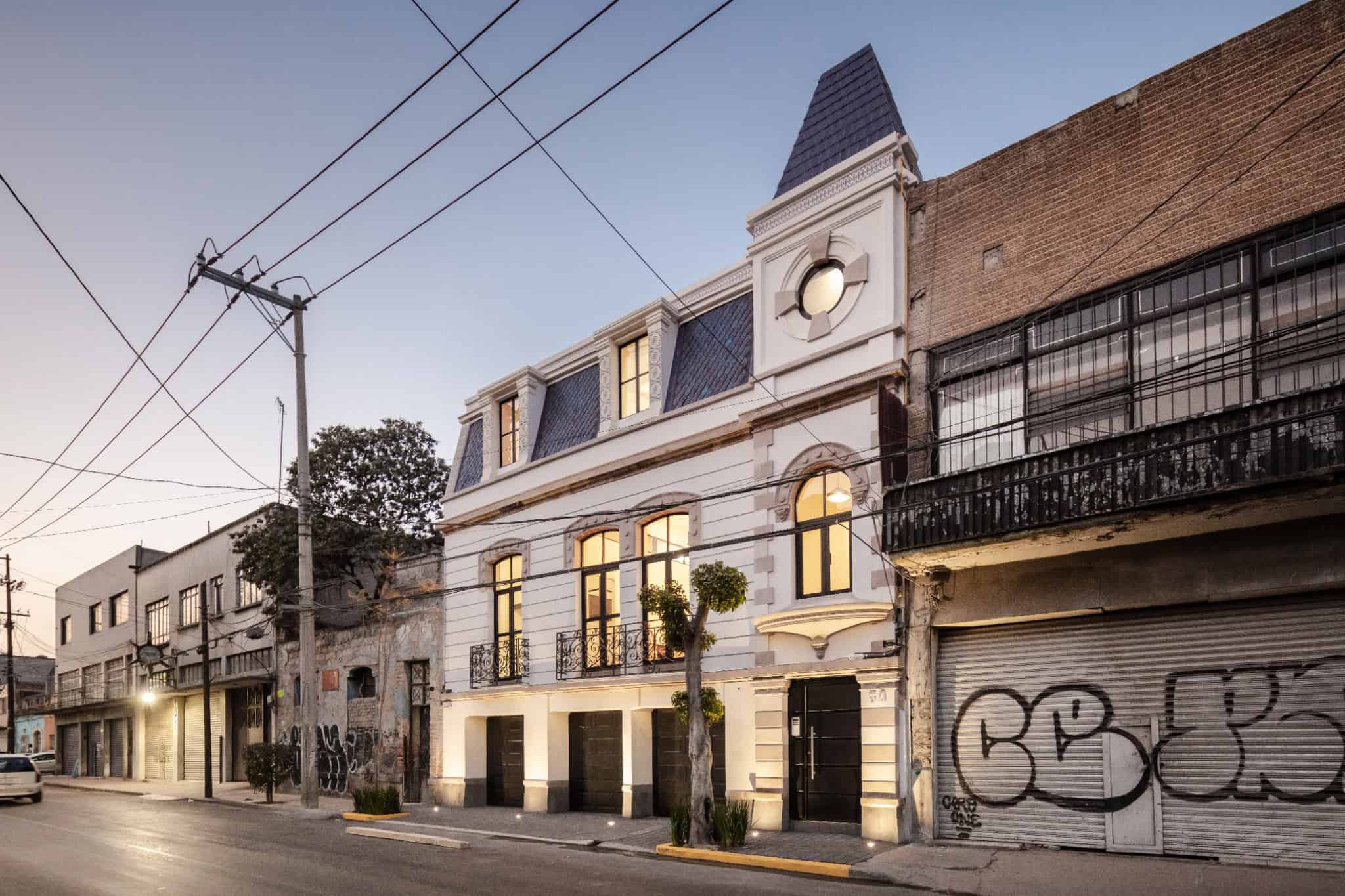
In the heart of Tacuba, one of Mexico City’s oldest and most culturally rich neighborhoods, MM34 – Mar Mediterráneo 34 by Inca Hernández Atelier stands as a powerful statement on how architecture can bridge time. Once a crumbling Porfirian-era mansion built in 1910, the residence has been meticulously restored and reimagined into a modern housing complex that fuses historical authenticity with contemporary design thinking.
Tacuba, located northwest of Mexico City’s historic center, was once home to the city’s elite. Over the decades, many of its grand estates were abandoned or demolished. Among the few survivors, the house at Mar Mediterráneo 34 remained—a silent witness to the passage of history and now, thanks to this sensitive intervention, a beacon of architectural renewal.
Restoration Rooted in Respect
The project began with a structure in deep deterioration. Originally composed of two volumes—one facing the street façade and another opening toward an interior courtyard—both had suffered decades of neglect, with the rear volume partially in ruins. The design team approached the challenge with a philosophy of continuity, restoring historical value while adapting the space for modern urban living.
Through careful craftsmanship, original materials and details were revived: hand-carved quarry stone on balconies and lintels, wrought-iron railings, wooden window frames, and artisanal glass roof tiles. These rescued elements now frame the renewed façade, preserving the home’s character while reestablishing its presence within the neighborhood.
Contemporary Interventions and Spatial Poetry
Inside, the transformation unfolds as a reinterpretation of heritage through a modern lens. A new vertical volume emerges within the main courtyard—an architectural gesture that frames the sky while evoking the rhythm of historic portals in light and shadow. Double-height openings rise from the ground, connecting the old and the new in a harmonious architectural composition.
A continuous volcanic stone base defines the ground floor, symbolizing both the literal and conceptual foundation of the project. It serves as the threshold between what remains and what has been reborn, articulating a narrative of rebirth within permanence.
Adaptive Living for a New Era
The revitalized structure now houses seven residential units across three levels—each uniquely configured as lofts, studios, family apartments, and a penthouse. These dwellings open toward a restored central patio or smaller courtyards filled with filtered natural light, vegetation, and latticework that preserve a distinctly Mexican identity.
The spatial organization promotes flexibility and human connection, balancing privacy and community while maintaining a strong relationship with the site’s historical layers. MM34 demonstrates how adaptive reuse can create modern urban living environments without erasing the past.
Sustainability Through Heritage
For Inca Hernández Atelier, sustainability extends far beyond material selection—it is a cultural and spatial responsibility. By reinhabiting an existing structure rather than building anew, Mar Mediterráneo 34 reduces the city’s environmental footprint, recycles original materials, and reactivates a dormant urban space.
This approach to sustainability—restoring rather than replacing—champions the concept of urban redensification, where new life is breathed into historic neighborhoods while maintaining their social and architectural fabric. The result is a project that preserves memory while shaping the city’s future.
Legacy and Urban Continuity
Mar Mediterráneo 34 is more than a housing project—it is a manifesto for architectural continuity. Through its careful restoration, respectful material palette, and contemporary reinterpretation, Inca Hernández Atelier has created an urban landmark that embodies both preservation and progress.
This work not only revitalizes a single property but contributes to Tacuba’s cultural rebirth, setting an inspiring precedent for how Mexico City can reclaim its architectural heritage and transform it into vibrant, sustainable living spaces for the future.

Photography © João Morgado


