
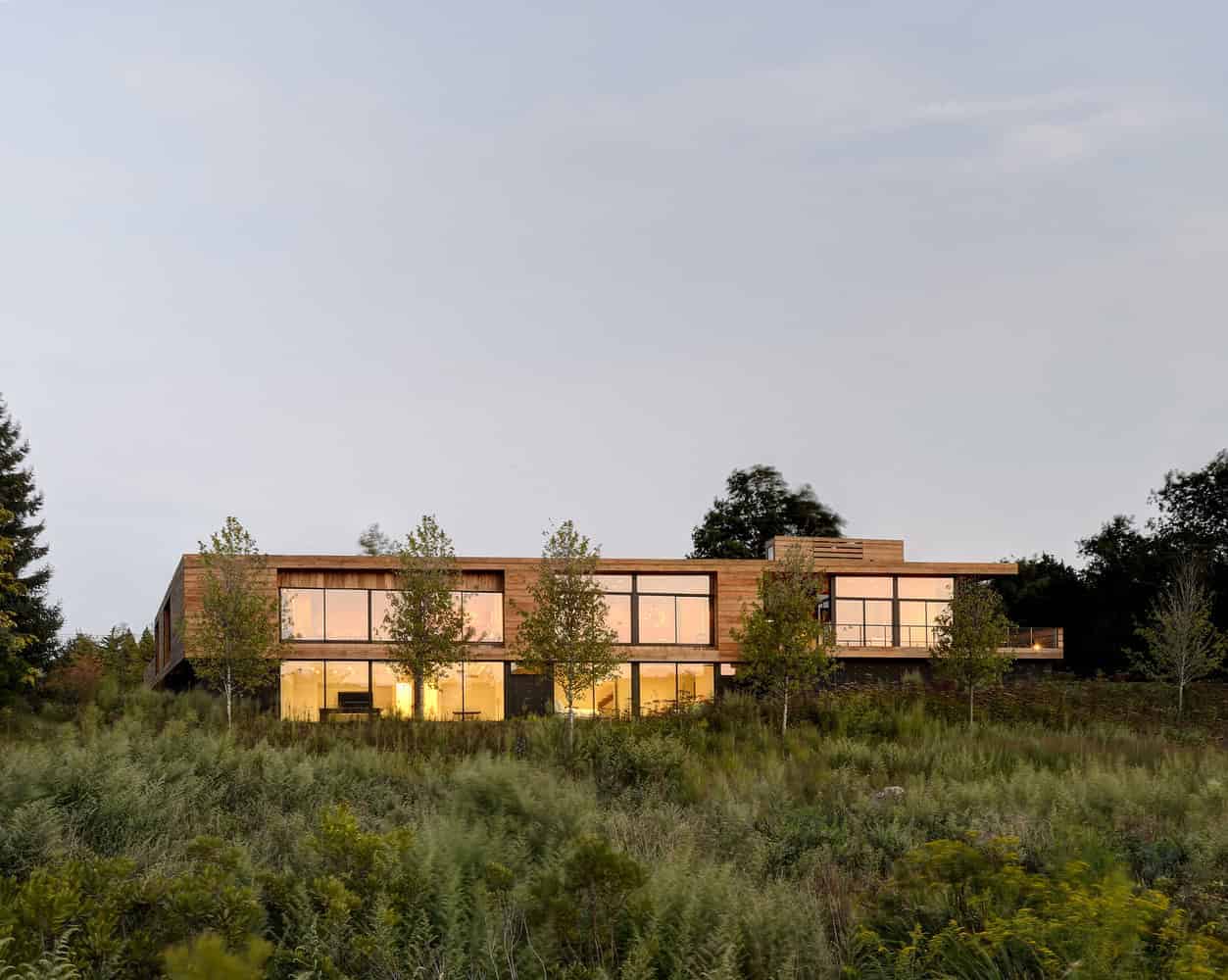
Mothersill Residence / Bates Masi + Architects / United States

  • Project: Mothersill Residence
  • Architect: Bates Masi Architects
  • Location: United States, Water Mill, New York
  • Year: 2013
  • Area: 560 m2

Nestled along a creek-front property in Water Mill, New York, the Mothersill Residence by Bates Masi + Architects masterfully intertwines historical preservation with contemporary design. The site houses two culturally significant structures designed by architect Andrew Geller in 1962—a small house and a studio—set amidst a diverse landscape of rare plantings, including a serpentine Yew garden and over 400,000 Siberian Iris.

Design Inspired by Coastal Boardwalks

Drawing inspiration from the elevated wooden boardwalks common in Eastern Long Island’s dunes, the design employs a continuous wooden path that connects the historic Geller structures with the new main residence. This boardwalk not only serves as a physical link but also becomes an architectural element, transforming into the floor, walls, and roof of the main house.

As described by the architects:

“Elevated, wooden boardwalks extending into the beachscape are a common occurrence in the dunes of Eastern Long Island. Hovering slightly over the ground, this simple device is a pathway to the beach that carefully negotiates a constantly changing terrain.”

Seamless Integration with the Landscape

The boardwalk meanders through the property, originating from the relocated Geller House in the Yew garden, winding around the serpentine hedge to a new swimming pool, and connecting to shaded outdoor living spaces. This path defines a new central lawn and culminates in a cantilevered deck that offers views of the sloping wetland and creek.

Material Consistency and Architectural Dialogue

All surfaces of the main house’s enclosure are constructed with the same wood decking as the boardwalk, creating a uniform material palette that blurs the lines between landscape and architecture. This consistency reflects the influence of Geller’s design and facilitates an architectural dialogue between the historic structures and the new residence.


Wooden deck and covered lounge with modern outdoor seating.
Photography © Bates Masi + Architects
Minimalist bedroom with built-in wooden bunk beds and large window.
Photography © Bates Masi + Architects
Contemporary house with dramatic angled wooden roof design.
Photography © Bates Masi + Architects
Pathway leading to a glass-fronted cabin with modern design.
Photography © Bates Masi + Architects
Poolside wooden deck surrounding a modern minimalist home.
Photography © Bates Masi + Architects
Infinity pool with mirrored reflections and outdoor lounge.
Photography © Bates Masi + Architects
Evening view of a wood-clad modern residence nestled in nature.
Photography © Bates Masi + Architects
White minimalist bathroom with integrated sink and subtle lighting.
Photography © Bates Masi + Architects
Modern living room with black fireplace panel and natural light.
Photography © Bates Masi + Architects


Open kitchen interior featuring a walnut island and glass walls.
Photography © Bates Masi + Architects
Modern bathroom with double sink, mirror wall, and wood finishes.
Photography © Bates Masi + Architects
Spa-style bathroom with freestanding tub and walk-in shower.
Photography © Bates Masi + Architects

Posted by Bates Masi Architects

Bates Masi + Architects is a full-service architecture firm rooted on the East End of Long Island and in New York City, with over six decades of experience across residential, hospitality, commercial and retail projects. The practice is distinguished by a commitment to deeply understanding each site, client and environment—allowing context, light, materiality and craft to inform every design. With a portfolio spanning everything from homes to schools to hotel interiors, Bates Masi emphasises design that enriches lives and enhances surroundings. Their work is recognised through hundreds of design awards and global publications, and frequently explores the balance between modern geometry and human experience, rendering spaces that are both refined and responsive.