
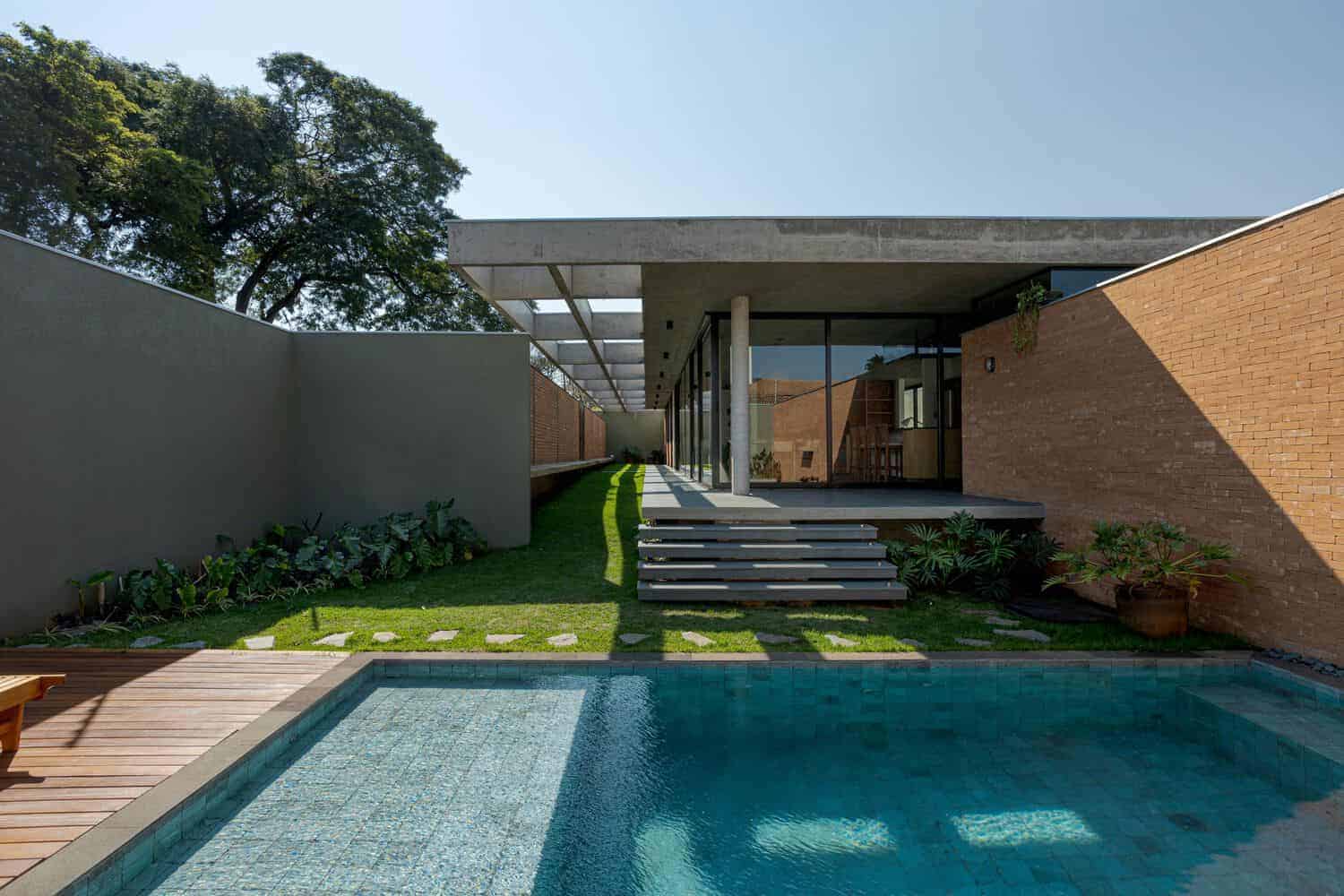
- Project: Lazer House
- Architect: Watanabe Arquitetura
- Location: Brazil, Maringá
- Year: 2023
- Area: 305 m2
- Photography: Jefferson Ohara
Where Sustainability Meets Modern Living
Perched gracefully on a sloping corner plot in Maringá, southern Brazil, Lazer House by Watanabe Arquitetura demonstrates how thoughtful architecture can turn site constraints into opportunities. Completed in 2023, this 3,283-square-foot residence is a testament to contemporary Brazilian design, seamlessly merging sustainability, functionality, and natural beauty.
A Split-Level Composition with Purpose
The home is composed of two distinct blocks that work harmoniously with the terrain:
-
Upper Block (Street Level): Houses the main social and private living spaces, all arranged to promote a close connection to a garden landscape that runs along the structure.
-
Lower Block: Recessed 90 cm below the upper volume, this section provides access to the garage and storage, oriented towards the secondary street—ensuring privacy and practical circulation.
This configuration not only respects the topography but enhances functional zoning, separating utility from daily life without disrupting the architectural flow.
Sun-Responsive Facade for Thermal Comfort
Facing southwest, the house contends with strong afternoon sun. Watanabe Arquitetura employed passive design strategies to control heat gain and maximize comfort:
-
Extended Eaves and Beams: Shade the façade while creating visual rhythm.
-
Red Clay Brick Panel: Functions as both a privacy screen and a thermal barrier, lending rich materiality to the external walls.
-
13-Meter Concrete Benches: Serve as social extensions that blend seamlessly into the garden, emphasizing indoor-outdoor living—a hallmark of tropical modernism.
As the sun shifts throughout the day, the interplay of light and shadow animates the structure, creating an ever-changing visual experience.
A Warm, Earthy Material Palette
The selection of materials underscores Watanabe Arquitetura’s commitment to regionalism and sustainability:
-
Red Clay Brick: Locally sourced and used as both a façade element and part of the solar control strategy.
-
Natural Slate Flooring: Offers thermal regulation while grounding the interiors in a natural palette.
-
Wooden Frames: Provide warmth and texture, especially in the private bedroom zones.
-
Exposed Concrete: Celebrates structural honesty and imparts a refined industrial feel.
Together, these materials promote a tactile, inviting atmosphere while addressing the local climate effectively.
Garden-Centric Living
Built on a 600-square-meter lot, the home’s design emphasizes connectivity to the landscape. Expansive openings and an open-plan configuration dissolve boundaries between inside and out. The garden isn’t just a visual asset—it’s a living, usable space that complements the home’s social core.
This layout encourages natural cross-ventilation and daylighting, reducing energy usage while enhancing overall well-being.
Sustainability at the Core
Lazer House is a case study in passive, climate-responsive design:
-
Natural Ventilation & Thermal Mass: Reduce the need for air conditioning in the hot Brazilian climate.
-
Locally Sourced Materials: Clay bricks and natural stone reduce embodied carbon and transportation impact.
-
Large Openings: Strategically positioned windows optimize daylight, reducing reliance on artificial lighting.
These measures make Lazer House not only beautiful but also environmentally responsible—meeting the needs of modern living without compromising ecological values.


Lazer House by Watanabe Arquitetura is more than just a residence—it is a resilient, livable structure shaped by its site, its climate, and a strong design ethos. Every design decision—from its sun-responsive brick screen to its garden-anchored layout—reflects a deep understanding of how architecture can both serve and inspire. The project is a remarkable example of how local materials, sustainable thinking, and modern aesthetics can come together to create a timeless home.
