
- Project: Ye Xiao Xiao
- Architect: Aurora Design
- Location: China, Mengzi, Yunnan
- Year: 2023
- Area: 240 m2
- Photography: INSPACE
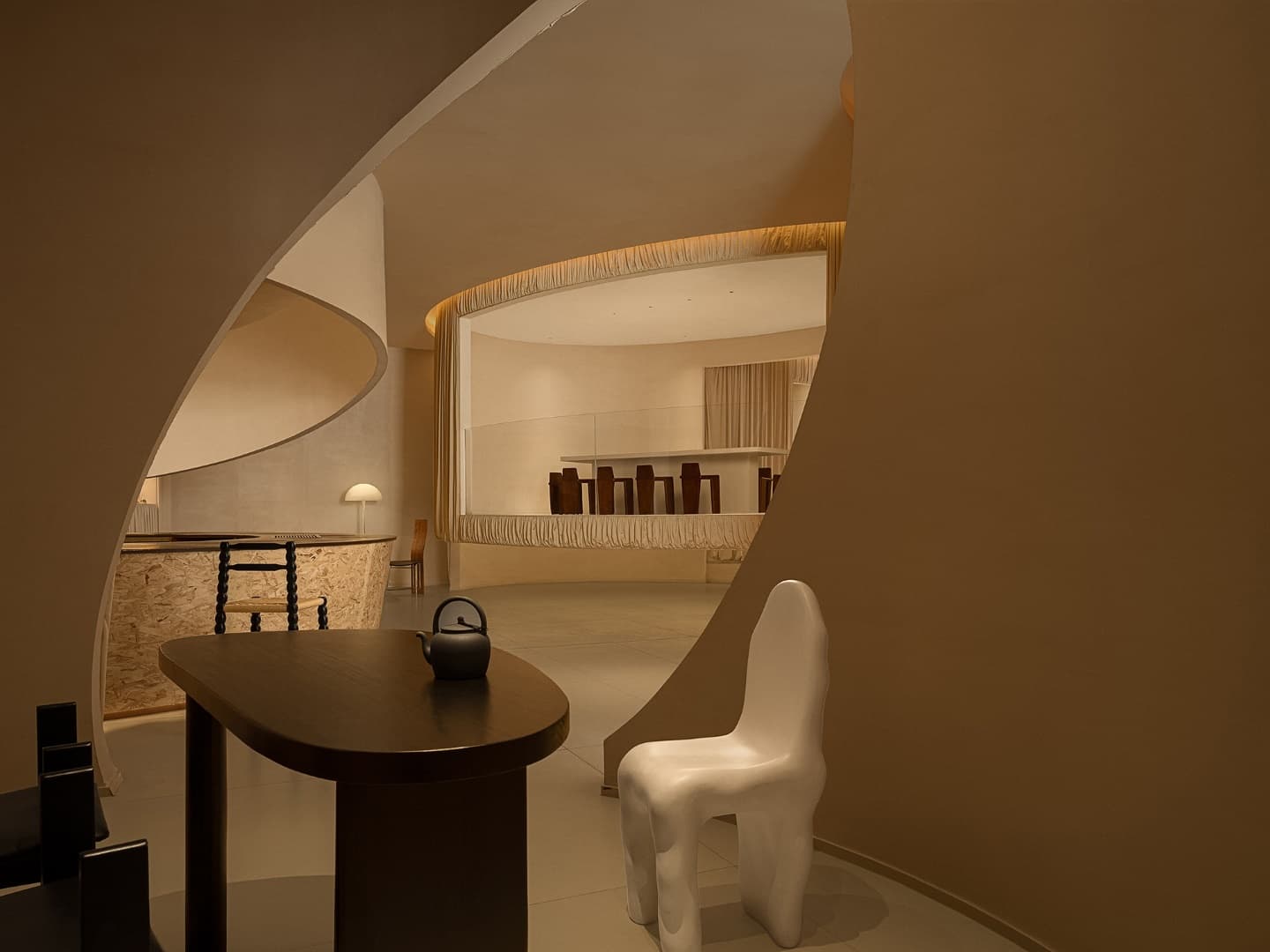
Ye Xiao Xiao, designed by Aurora Design in Mengzi, Yunnan Province, is a 2,583-square-foot tea space that fuses tradition, nature, and emotion. Drawing from Yunnan’s profound tea heritage and the ancient Tea Horse Road, the project immerses visitors in a world where architecture becomes a sensory experience of calmness, memory, and cultural resonance.
Tea Culture as Emotional Design
Yunnan Province is often regarded as the birthplace of tea culture, with traditions of cultivation and trade dating back thousands of years. Aurora Design honors this history through the lens of “emotional design”—transforming intangible feelings into physical space. By abstracting emotions connected to tea culture, history, and landscape, the architects created an environment that encourages tranquility, reflection, and harmony.
Spatial Flow and Circular Design
The spatial layout unfolds through circles of varying sizes, guiding visitors on a fluid journey reminiscent of winding tea routes. Each curve, threshold, and transition becomes an emotional passage, offering glimpses of history while connecting the present to the past. Floor-to-ceiling windows bring in natural light and open views, enhancing the sense of immersion in both nature and memory.
-
Entrance & Bar Counter: The design employs earthy tones and raw materials inspired by the Tea Horse Road. This tactile palette grounds the space in authenticity.
-
Central Platform: A raised platform encircled by white walls and cascading curtains anchors the interior. The fabric falls like a waterfall, softening the space and creating a sense of movement.
-
Tea-Drinking Area: Ascending to the upper level, visitors reach a tea space embraced by curved walls, plants, and organic furniture, fostering intimacy and comfort.
Materiality and Atmosphere
The palette blends natural wood, stone, fabric, and earthy colors—white, beige, and deep brown—creating a continuum of emotions from serenity to contemplation. Curtains and soft textiles dominate, acting as a communicative medium between space and soul. The interplay of softness and solidity echoes the contrast between illusion and reality, creating balance and tension.
Organic decorative arrangements—bonsai, single-cluster plants, and natural stone—further enhance the tranquil atmosphere. Active white space design provides breathing room, ensuring that stillness becomes part of the architecture.
Emotion as Architecture
Aurora Design treats emotion as the foundation of architecture. The “coconut paradigm” of contrasts—rough exteriors and refined interiors—translates here into a harmonious coexistence of humanity, nature, and memory. Visitors are invited to leave behind daily noise and embrace serenity through sensory immersion: the aroma of tea, the rustling of leaves, the shifting colors of light.
The project creates what the designers call “emotional islands”—spaces where emotions can rest, transform, and reconnect with the human spirit. It is both a cultural homage and a refuge for modern life.
Ye Xiao Xiao is more than a tea space—it is an experiential journey through history, nature, and inner emotion. By grounding design in Yunnan’s tea heritage and layering it with contemporary spatial interpretation, Aurora Design has crafted a timeless refuge where architecture, culture, and emotion converge.


