
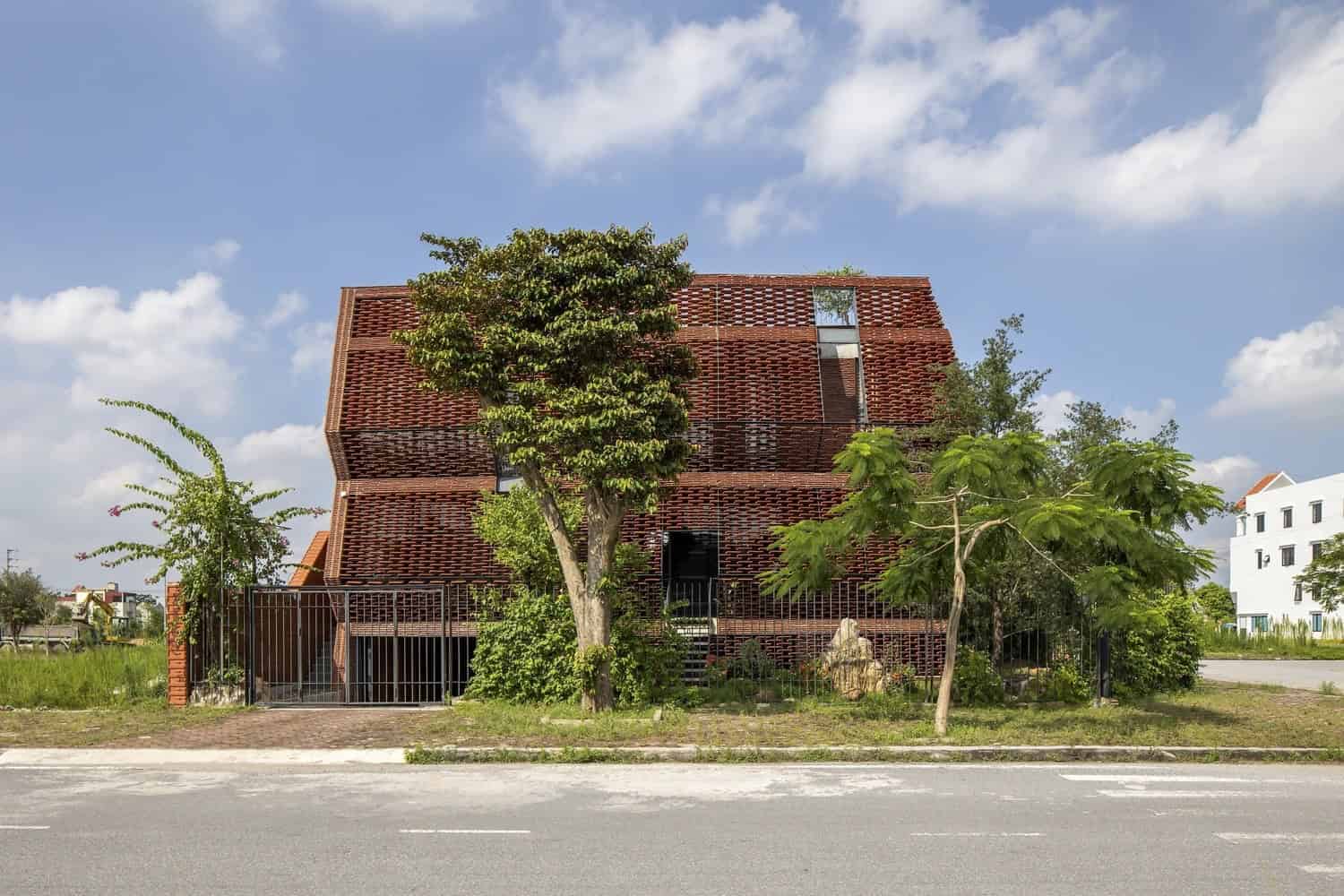
- Project: Tile Nest House
- Architect: H&P Architects
- Location: Vietnam, Phu Lu
- Year: 2021
- Area: 450 m2
- Photography: Le Minh Hoang
In Phu Lu, Vietnam, Tile Nest House by H&P Architects redefines the relationship between architecture, materiality, and context. Rising from a site once linked to ancient burial grounds, the residence draws inspiration from the excavation process itself, transforming what was removed into a generative design concept. The result is a house with a distinct corrugated shell, crafted from suspended tiles, that fuses cultural memory with contemporary innovation.
Concept Rooted in the Ground
The design began with the site’s history. Located near a former cemetery, the land required excavation before construction. H&P Architects embraced this necessity as inspiration, using the notion of an “ancient pit house” combined with a “nest”—a structure with layers, nooks, and crannies that rise toward the ground plane. This approach not only shaped the architectural language but also introduced the potential for geothermal energy, harnessing the earth’s natural stability to moderate the building’s internal climate.
A Corrugated Shell of Suspended Tiles
The exterior of the house is defined by an inventive use of tile—a material deeply familiar in Vietnamese culture. Rather than roofing, the tiles form a porous, suspended shell that wraps the home, evoking the rhythm of stacked roofs and sunshades found in traditional dwellings. This perforated skin filters sunlight, shades interiors, and allows breezes to pass through, creating dynamic patterns of light and shadow that animate the house throughout the day.
Green Balconies and Transitional Layers
Between the tiled shell and the interior, transitional green balconies at varying heights serve as buffers that regulate temperature and humidity while offering spaces for relaxation. These planted terraces frame views, filter air, and weave nature directly into the architecture. The layering of shell, balcony, and core creates a living envelope that responds organically to its environment.
Sensory Architecture Immersed in Nature
Tile Nest House is more than a shelter; it is an experiential architecture. Its suspended tiles invite touch and visual engagement, while the interplay of sun, wind, and vegetation creates a constantly shifting sensory environment. The design embodies a philosophy of immersion in nature, where architecture is not a backdrop but an active participant in daily life.
Tradition Reinterpreted
For generations, tile has been a humble, ubiquitous material in Vietnam. By reimagining its use in a suspended and perforated form, H&P Architects elevate the material to both symbolic and functional importance. The house offers a new way of experiencing a traditional element—seeing through it, touching it, and sensing its presence in patterns of light, shadow, and breeze.
A Sustainable, Memory-Rich Home
At 4,843 square feet, Tile Nest House is large yet intimate, merging cultural familiarity with ecological responsibility. Through its geothermal design, green balconies, and recyclable tile envelope, the home minimizes its environmental impact while offering comfort and resilience. Most importantly, it conveys memory—honoring both the site’s past and the enduring place of tile in Vietnamese life.


