
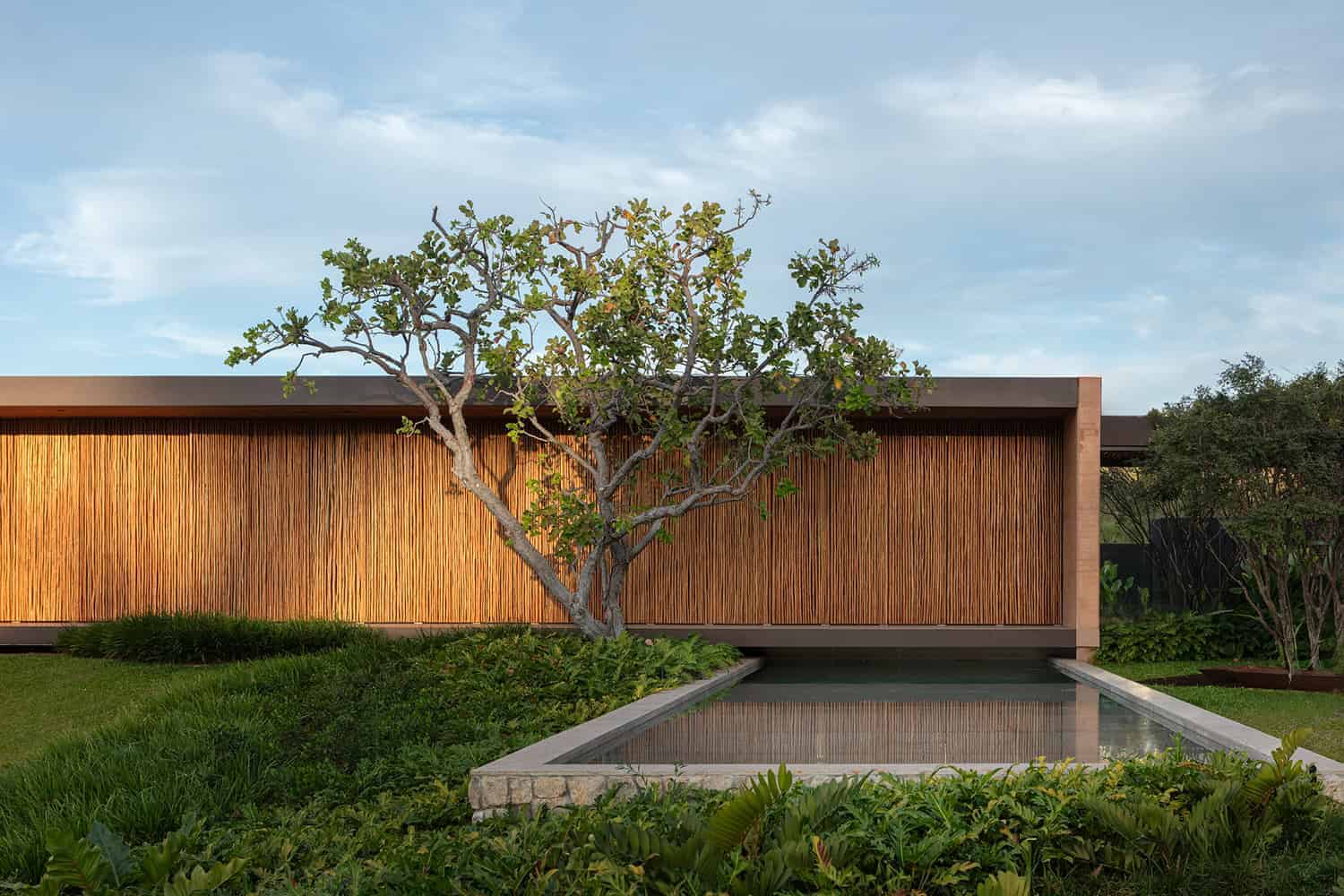
- Project: Taipa Residence
- Architect: Valeria Gontijo + Arquitetos
- Location: Brazil, Lago Sul, Brasília
- Year: 2024
- Area: 620 m2
- Photography: Front
Earth, Light, and the Essence of Brazilian Architecture
Set on a serene plot in Lago Sul, the Taipa Residence by Valéria Gontijo + Arquitetos redefines contemporary Brazilian living through one of the country’s oldest construction techniques — taipa de pilão, or rammed earth. This 620-square-meter residence emerges as a sculptural yet grounded composition, a dialogue between elemental material, modern spatial clarity, and the golden light of the Central Plateau.
The home is a testament to how ancient craftsmanship can meet modern minimalism. Thick, earthy walls frame luminous interiors; open verandas dissolve boundaries between shelter and nature. It’s an architecture that breathes with the land — tactile, sustainable, and profoundly human.
A Contemporary Interpretation of Tradition
The project’s guiding principle was to build with the land rather than on it. Rammed earth became both structure and finish — a material that expresses geological memory in every layer. Its soft ochre tones reflect the surrounding soil, changing hue as sunlight shifts through the day.
The plan unfolds in an L-shape that embraces the garden and swimming pool, forming protected outdoor living areas. One wing accommodates social spaces — living room, dining area, kitchen, and veranda — while the other houses private suites and intimate retreats. Large glazed openings flood the interior with daylight, ensuring cross-ventilation and thermal comfort year-round.
Material Honesty and Sensual Minimalism
Gontijo’s approach to materiality is minimalist yet warm. The rammed-earth walls act as a natural regulator of temperature and humidity, their mass absorbing heat by day and releasing it at night. Inside, polished concrete floors, biribá wood ceilings, and local granite complement the rawness of the taipa, creating a calm palette that celebrates imperfection and touch.
The architect carefully curated contrasts — the rough tactility of earth against the precision of glass and metal; heavy, grounded volumes juxtaposed with floating canopies. The residence avoids decorative excess, relying instead on proportion, texture, and light to achieve harmony.
Light as Architecture
Natural light defines the spatial rhythm of the house. Wide overhangs, latticed wood screens, and the deep reveals of the taipa walls filter the tropical sun, producing a chiaroscuro effect that changes throughout the day. At dusk, indirect lighting washes the earthy surfaces, revealing subtle color gradations that evoke the landscape beyond the walls.
Even at night, the architecture remains connected to its surroundings — the glow of the taipa blending seamlessly with the amber tones of Brasília’s sky.
Crafted for Living
Inside, the living area opens fluidly onto the veranda, creating a continuous social zone where cooking, dining, and relaxation coexist. The kitchen island, carved from local stone, anchors the space with sculptural presence. Bespoke furniture and crafted lighting pieces reinforce the home’s commitment to material integrity.
The private suites embody tranquility: minimal furnishings, natural textiles, and framed views of native vegetation. Bathrooms follow the same ethos — warm light, soft stone, and handcrafted fittings that celebrate touch.
A Sustainable Soul
Every design decision supports environmental and cultural sustainability. The taipa technique reduces embodied energy, using local soil and minimal cement. The home’s orientation, roof overhangs, and ventilation strategy eliminate the need for mechanical cooling. Water is harvested for irrigation, while vegetation shades and cools the microclimate.
By combining passive design, local materials, and timeless aesthetics, the project demonstrates that luxury and sustainability are not opposites — they are partners in architectural longevity.
Architecture Rooted in Place
The Taipa Residence is more than a home; it’s a manifesto for architecture that listens to the land. It is at once ancient and new — a structure that feels inevitable, as if it had always belonged to the site.
Valéria Gontijo’s work consistently explores the emotional resonance of materials and the dialogue between craft and modernity. In this project, she achieves balance with quiet precision: a home that is earthy yet elegant, grounded yet luminous, simple yet transcendent.
This is Brazilian architecture at its most essential — poetic, tactile, and deeply connected to nature.


