
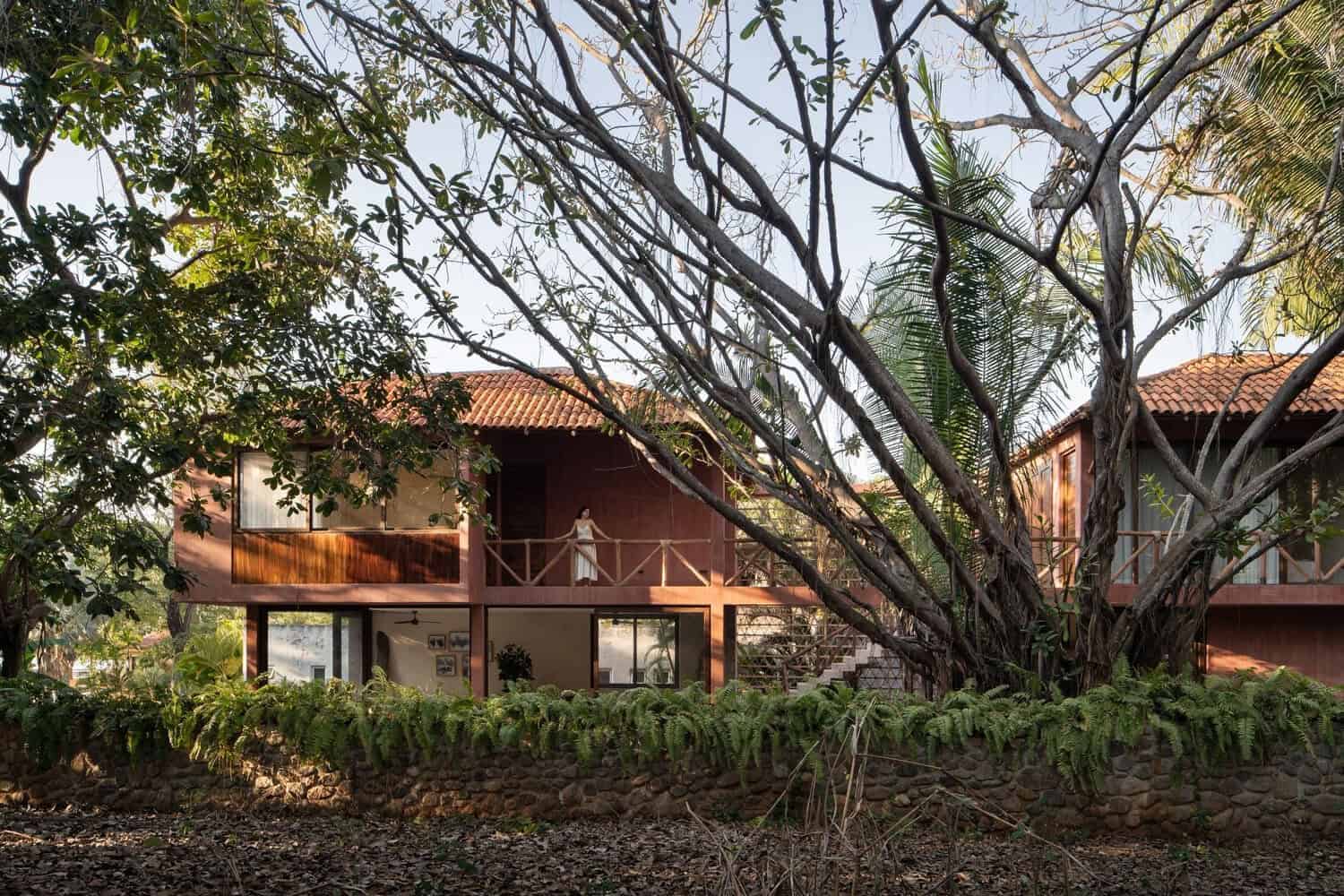
- Project: Chacakul House
- Architect: 0studio Arquitectura
- Location: Mexico, Chacala, Nayarit
- Year: 2022
- Area: 480 m2
- Photography: César Béjar
A Tropical Refuge on the Pacific Coast
The Chacakul House by 0studio Arquitectura is a contemporary tropical retreat perched above the lush coastline of Chacala, a quiet beach town on Mexico’s Riviera Nayarit. Conceived as both a private escape and a celebration of outdoor living, the residence blends architecture and landscape into a seamless experience of sea, breeze, and vegetation.
The design speaks to restraint and immersion — a home that feels neither entirely built nor purely natural, but balanced precisely between the two.
Concept: Fluid Boundaries Between Architecture and Nature
The starting point for Chacakul House was the desire to inhabit the coastal jungle without erasing it. The architects conceived a horizontal, open-air structure that frames views of the Pacific while allowing the house to breathe with the changing climate.
The home’s layout is guided by three essential principles:
-
Respect for topography — minimal excavation and foundation footprint preserve native vegetation.
-
Permeability — cross-ventilation replaces mechanical cooling; open corridors, courtyards, and verandas create natural airflow.
-
Integration of living and landscape — indoor rooms extend outward, merging with terraces, pools, and gardens.
The result is a residence that feels both sheltered and exposed — a choreography of light, shadow, and tropical air.
Layout and Spatial Organization
The house unfolds along a gentle slope with a series of stepped platforms, each corresponding to a specific function and view.
-
Entry Level: A shaded corridor lined with natural stone walls introduces the rhythm of solid and void that defines the home.
-
Central Living Zone: The social heart — a large, open pavilion with living, dining, and kitchen areas under a high timber ceiling. Folding glass and wooden panels open fully, transforming the interior into a breezy terrace.
-
Private Wing: Two bedrooms and the master suite extend toward the sea, each with its own terrace and outdoor shower.
-
Lower Platform: An infinity pool and deck appear to dissolve into the ocean horizon, connecting visually with the blue expanse of the Pacific.
A sequence of patios and gardens threads through the house, offering glimpses of palm trees, sunlight, and water reflections — constantly reminding occupants of their place within nature.
Material Expression and Craft
Chacakul House embodies the Mexican coastal vernacular reinterpreted through modern geometry. Materials are tactile, warm, and weather-resistant:
-
Structure: Exposed concrete provides thermal mass and longevity in the humid climate.
-
Finishes: Local parota wood for ceilings, shutters, and furniture adds golden warmth against the raw concrete.
-
Stonework: Volcanic rock and river stones connect the home visually to its surroundings.
-
Roofing: A mixture of concrete slabs and pergola structures layered with bamboo and palm leaves for filtered light and ventilation.
Natural patina is embraced — materials are meant to age gracefully under the tropical sun and salt-laden air.
Light, Wind, and View
The house’s most powerful design element is the air itself. The architects oriented every room to capture ocean breezes, while deep overhangs and screens temper the intense tropical sunlight. The interplay of filtered light through bamboo and wood creates a constantly shifting atmosphere that changes with the day.
Large openings frame cinematic vistas — not only of the ocean but also of the dense jungle that surrounds the site. By balancing openness and shade, Chacakul House remains comfortable without dependence on mechanical systems, achieving a quiet kind of sustainability born from design intelligence rather than technology.
A Home Rooted in Place
Rather than imposing a singular architectural gesture, 0studio Arquitectura created a composition of modest, interrelated volumes that dissolve into the hillside. The home’s horizontality mirrors the coastline; its material palette echoes the region’s textures — sand, wood, stone, and sun.
At night, the house glows softly, its interiors open to the warm coastal air. The sound of waves becomes part of the architecture, and the house itself feels like an extension of the landscape.
Chacakul House demonstrates how contemporary design can remain humble, tactile, and profoundly connected to its environment — a vision of tropical modernism that prioritizes emotion and atmosphere over spectacle.


