
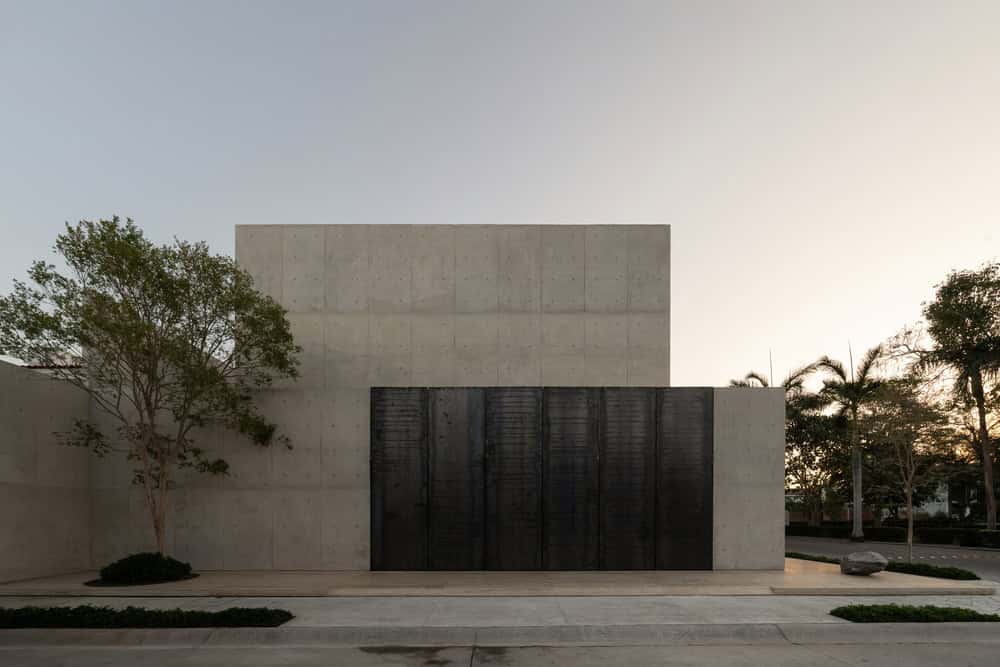
- Project: House Tao (Casa Tao)
- Architect: HW Studio
- Location: Mexico, Puerto Vallarta, Jalisco
- Year: 2025
- Area: 472 m2
- Photography: Hugo Tirso Domínguez, César Belio, Gustavo Quiroz
A House Born from Memory
House Tao emerges not from a grand statement but from the quiet memories and daily life of its inhabitants. The design is shaped by the desire for shade, calm, and introspection. Every gesture—curved wall, angled opening, muted concrete surface—echoes a longing for refuge from light, noise, and the intense heat of the coastal climate.
The clients, Gustavo and Cynthia, shared their dream of living “inside a Japanese museum”—not in cold formality, but as spaces where light and silence slow time, where shade feels like a balm, and where architecture pauses rather than parades.
Composition, Massing & Spatial Strategy
-
Plinth & Base: The lower level is a dense concrete plinth containing bedrooms, garage, and services. These spaces are arranged around an internal courtyard, prioritizing privacy, quiet, and soft daylight.
-
Social Volume Above: A light double-height box is suspended above. This elevated social pavilion houses living, dining, kitchen, and library functions. Because it floats, it breathes—opening to breezes and tree canopies, shielded from street noise and direct sun.
-
Curved Threshold: A gently curving wall at the entry marks a liminal moment—not harsh or confrontational, but inviting. That curve softens the transition from public to private, from street to sanctuary.
-
Oblique Orientation: Rather than face the street head-on, the house orients at a diagonal to capture shade and distant breeze while avoiding harsh exposure. The shape is deliberate, letting presence be sensed without dominating spectacle.
Light, Shade & Atmosphere
Shade is the protagonist here. Windows are modest, apertures angled. Light is filtered, not flooded. The concrete surfaces are raw and warm—they absorb sunlight silently, not bounce it. Inside, walls become canvases of shadow, thresholds become moments of pause, and each space is calibrated to offer rest. The architecture prefers penumbra to glare, quiet over volume, and gesture over display.
Rooms connect through voids, courtyards, and elevated patios. Silence is not absence—it is expressed. The house cultivates atmospheres where one can wait, reflect, be steady.
Materials, Tactility & Sensory Design
-
Concrete: Honest, exposed concrete is the primary material. Over time, it warms, its surfaces taking on depth and nuance.
-
White Surfaces: White planes contrast with concrete, emphasizing calm luminosity without excessive glare.
-
Wood Elements: Timber is used sparingly in doors, screens, and furniture to temper the solidity of concrete with texture.
-
Courtyards & Lightwells: Interiors open into courtyards to allow air, daylight, and greenery to infiltrate without full exposure.
Every threshold and transition is an opportunity for a change in light and mood. Walls, blades, screens—they all moderate the movement of light and shadow.
Program & Experience
-
Ground Floor: Quiet bedrooms arranged around internal light courts, bath and utility zones, garage, and access.
-
Upper Pavilion: Social functions float above—living, dining, kitchen, library. These rooms open outward to elevated terraces and treetop views.
-
Courtyards & Blurs: The internal courtyard provides stillness and filtered daylight to private rooms. Open-air patios and overhangs extend living outward without disclosing the inside fully.
-
Vertical Circulation: Carefully placed stair connects the plinth and pavilion, passing through light and shade, heightening transition rather than just movement.
The house is designed not to impress but to host life comfortably—spaces slow, smells drift, breezes enter gently, shadows deepen.
Why House Tao Matters
House Tao is a lesson in restraint. In a coastal, humid climate, it rejects flamboyance, instead seeking depth—of memory, silence, material, and light. It is architecture that turns inward to find calm, that treats shadow as habitat, that listens to breeze and leaf. In doing so, it becomes timeless.


