
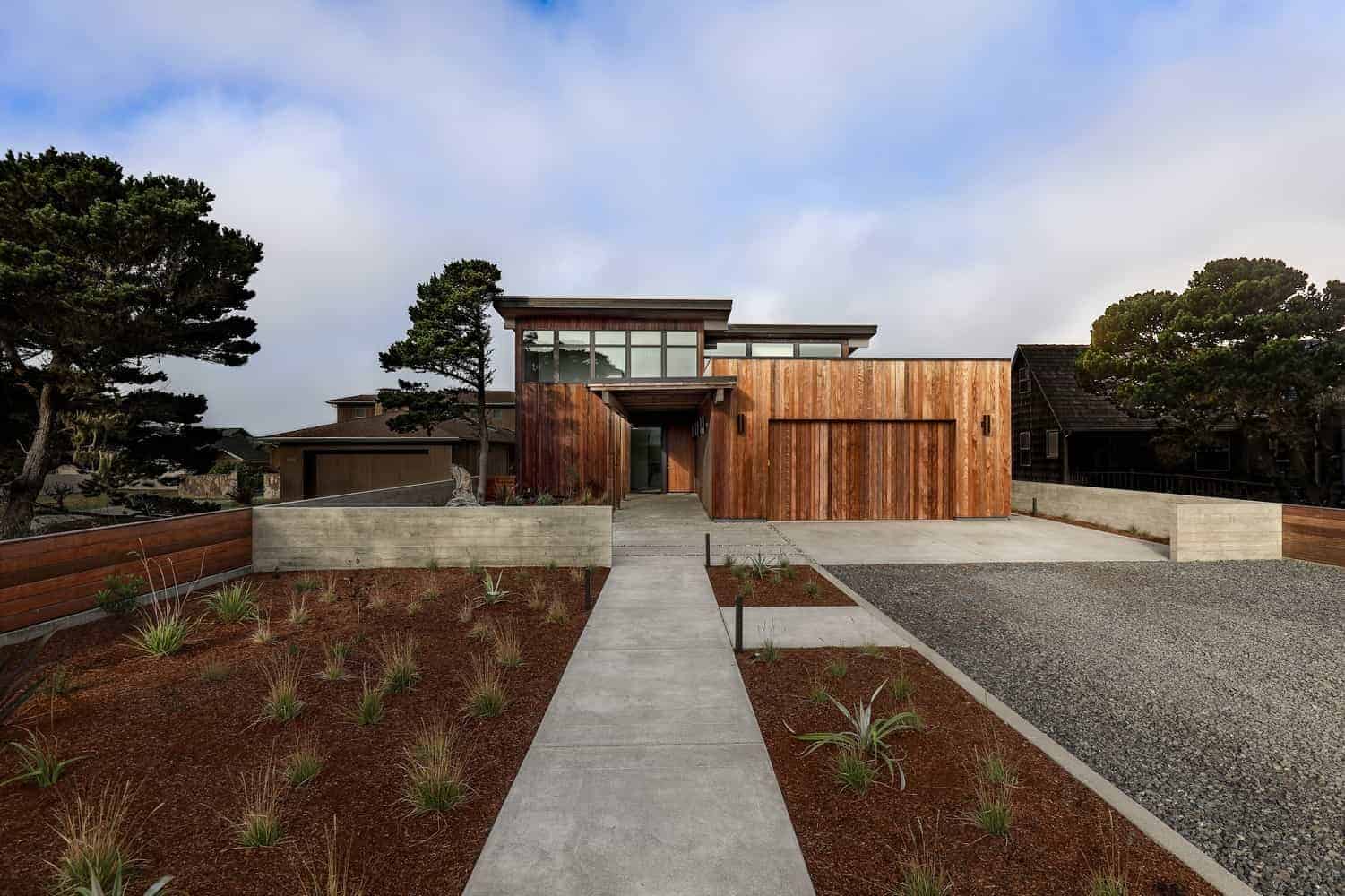
- Project: Face Rock Beach House
- Architect: Giulietti Schouten Weber Architects
- Location: United States, Bandon, Oregon
- Year: 2020
- Area: 407 m2
- Photography: Valve Interactive
A Coastal Retreat Framed by Legend and Landscape
Perched dramatically on an ocean-front bluff in Bandon, Oregon, Face Rock Beach House by Giulietti Schouten Weber Architects embraces both its mythic coastal setting and the challenges of building in a dynamic marine environment. The home overlooks the iconic Face Rock sea stack, a natural landmark steeped in Coquille tribal legend, said to represent Princess Ewauna gazing skyward.
This multi-generational retreat was born from the owners’ long-held affection for the land — a site they cherished for years before finally deciding to build. Their vision was clear: a modern yet timeless home that could host family gatherings while maintaining a close dialogue with the surrounding landscape.
“The design needed to merge mid-century modern sensibility with Oregon’s rugged coastal vernacular,” note the architects. “Our goal was to let the architecture recede and the view command attention.”
Site and Design Strategy: Respecting the Ocean’s Edge
The residence occupies a narrow site governed by strict coastal setback regulations, which dictated careful planning to preserve both neighboring sightlines and panoramic ocean views. GSW/A’s solution was a two-level design, carefully oriented so that nearly every major space captures a view of the Pacific and the rock formations scattered along the shore.
By removing invasive vegetation and regrading the terrain, the architects ensured uninterrupted vistas from both levels while maintaining a respectful distance from the bluff edge.
The plan’s spatial logic is simple and functional:
-
Lower level: communal areas open toward the sea through expansive glass walls, blurring the line between inside and out.
-
Upper level: private suites oriented for privacy yet preserving full coastal panoramas.
Architecture: Mid-Century Modern Meets Coastal Vernacular
The home’s aesthetic draws from the clarity and restraint of mid-century modernism, interpreted through robust coastal materials suited for Oregon’s demanding weather.
Key architectural features include:
-
Vertical Ipe tongue-and-groove cladding, chosen for its natural durability and warm tone, which weathers beautifully over time.
-
A butterfly roof that rises toward the ocean, maximizing natural light and enhancing the sense of openness.
-
Board-formed concrete accent walls and low perimeter fencing that ground the building within its natural dune landscape.
-
Expansive glazing that frames the shifting moods of the Pacific and floods interiors with diffuse coastal light.
Together, these elements create a sophisticated yet unpretentious coastal architecture—one that prioritizes sensory connection and endurance over ornament.
Sustainability and the Green Roof Innovation
A standout feature of Face Rock Beach House is its green roof atop the flat garage volume — a design move both aesthetic and ecological. Planted with low-maintenance, native species arranged in a graphical pattern, the roof transforms an otherwise unused surface into an ever-changing landscape visible from the upper level.
This living roof not only enhances the home’s visual harmony with its environment but also plays a critical environmental role by:
-
-
Reducing stormwater runoff,
-
Improving insulation and thermal comfort, and
-
Providing a microhabitat for local pollinators.
-
Given Bandon’s heavy annual rainfall—averaging 60 inches per year—this strategy also serves as a sustainable response to the site’s climatic realities.
Materiality: Warmth Amid the Elements
Inside, the material palette maintains the balance between warmth and durability. Natural wood tones complement neutral concrete and muted coastal hues, creating a tranquil interior atmosphere that mirrors the serenity of the surrounding seascape.
Each element — from window framing to furniture detailing — is chosen to withstand salt air and wind exposure while promoting visual continuity between interior and exterior spaces.
A Family Legacy Anchored in Place
Ultimately, Face Rock Beach House is more than a seaside dwelling; it is a family retreat grounded in memory, myth, and landscape. Its architecture is deliberate yet effortless, allowing Oregon’s dramatic coastline to take center stage.
Through a synthesis of modern craftsmanship, regional materiality, and ecological sensitivity, Giulietti Schouten Weber Architects have created a residence that honors both its human story and its natural heritage — a home that gazes out toward the Pacific with enduring grace.


