
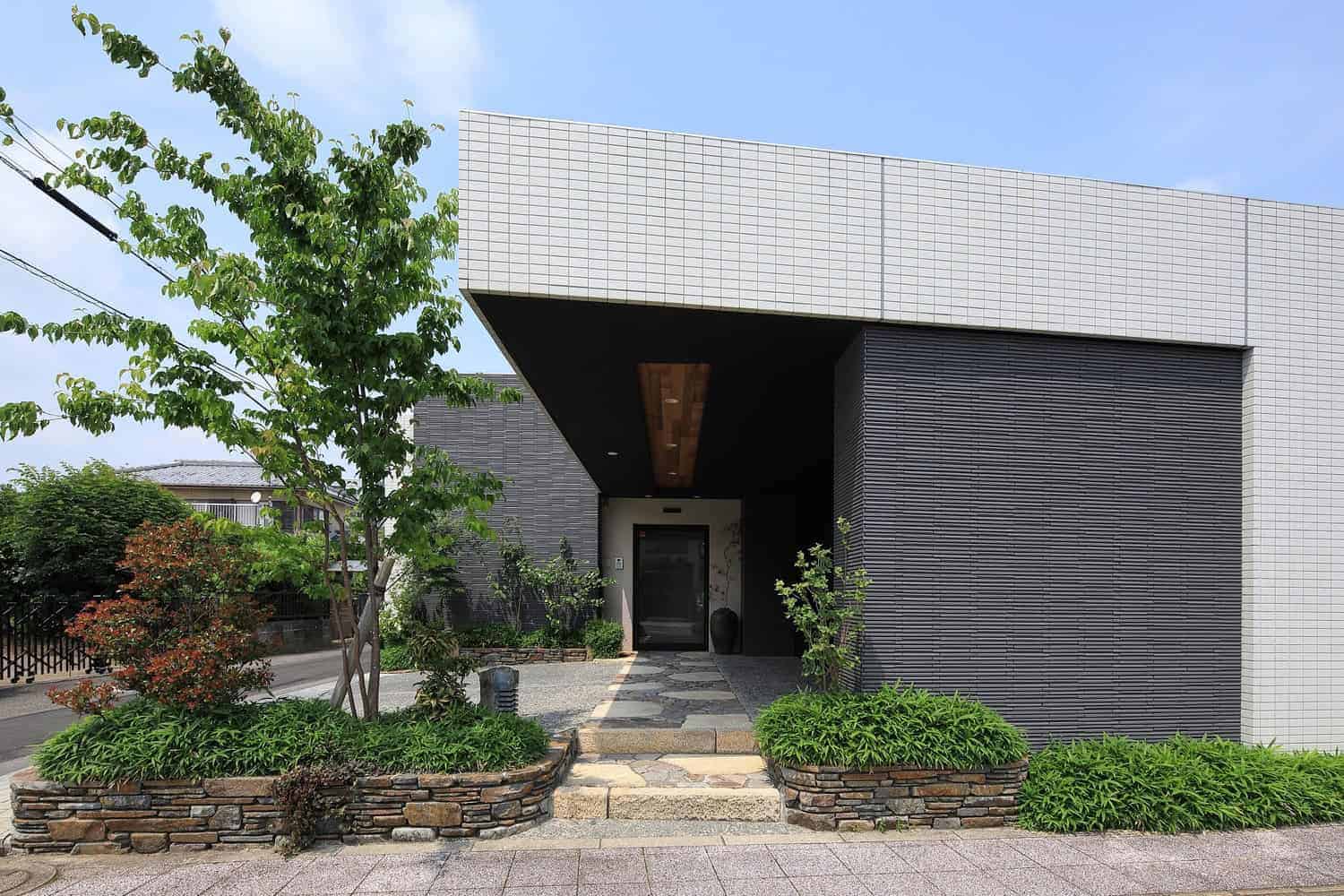
- Project: FORT7 House
- Architect: Ishiodori Takeshi Architecture
- Location: Japan, Shintomi
- Year: 2019
- Area: 216 m2
- Photography: Studio Marsh
A Home that Lives Among Gardens
In the compact urban context of Shintomi, Miyazaki Prefecture, the FORT7 House stands out as a masterful re-imagining of domestic living. Designed by Takeshi Ishiodori Architecture, this 216 m² residence turns conventional lot constraints into opportunities—creating a home that emphasises greenery, light and spatial layering rather than outward spectacle.
The client expressed a simple yet profound desire: “I want to live with plants.” With that as the starting point, the architecture transforms the tight site into a sequence of garden-filled spaces and interior zones. Instead of turning inward in retreat, the house embraces nature as its primary structure.
Concept & Spatial Architecture
The site’s challenge—a long, narrow shape running north-south, with the road to the south—became the pivot for the design. From the street, one enters a modest foyer and immediately moves through to a central garden; past that lies the living room, then another courtyard, then the main bedroom zone with a water-court beyond. The architecture orchestrates three distinct courtyard realms: each with its role—main garden, secondary garden, open-air bath court.
This progression of space functions like a journey from public to private, exterior to interior, movement to stillness. Each zone is sited to draw light, shade and greenery into daily life. The internal plan remains deceptively simple—yet the experience is rich, layered and enduring.
Structure, Materiality & Atmosphere
The home uses a restrained material palette—reinforced concrete for structure, warm timber finishes inside, generous glazed openings and natural stone paving in the garden zones. The contrast between solidity and transparency is deliberate.
In living areas, large sliding doors open directly to the main garden. The courtyard walls, darker textured surfaces, and deep overhangs create calm, filtered light. The secondary garden sits between living and bedroom wings—a quiet green buffer. The bath court at the rear unfolds under sky.
The atmosphere is one of quiet sophistication—no flashy gesture, no visual noise. Instead: shadow, texture, foliage, still water, changing daylight. The result is a home you sense more than simply see.
Nature Within – Indoor-Outdoor Integration
From dawn to dusk the house responds to nature. The northern bedroom wakes to filtered light through the trees of the secondary garden. The living room opens onto the main garden and outdoor living room under a pergola. At night the bath court becomes a space of serenity—enveloped by walls yet open to sky and greenery.
This is architecture that blurs boundaries: inside becomes garden becomes outside; structure becomes frame for life; house becomes container for nature rather than mere shelter.
Architectural Significance
-
Site intelligence: Rather than fighting the narrow lot, the house uses it as the basis for its spatial narrative.
-
Courtyard typology updated: The ancient Japanese courtyard concept is given a 21st-century reinterpretation—three gardens, each distinct but unified.
-
Material restraint, emotional depth: The palette is minimal but the experience is rich—a lesson in how less can achieve more.
For architects, students and aficionados of residential design, FORT7 presents a compelling case: real constraints, creative solutions, and meaningful architecture.
The FORT7 House by Takeshi Ishiodori Architecture is not a monument—it is a measured, living home. It invites residents to live with plants, to breathe among light and shadow, to experience architecture as habitat. In Shintomi’s quiet streets, this house neither shouts nor hides—it belongs.


