
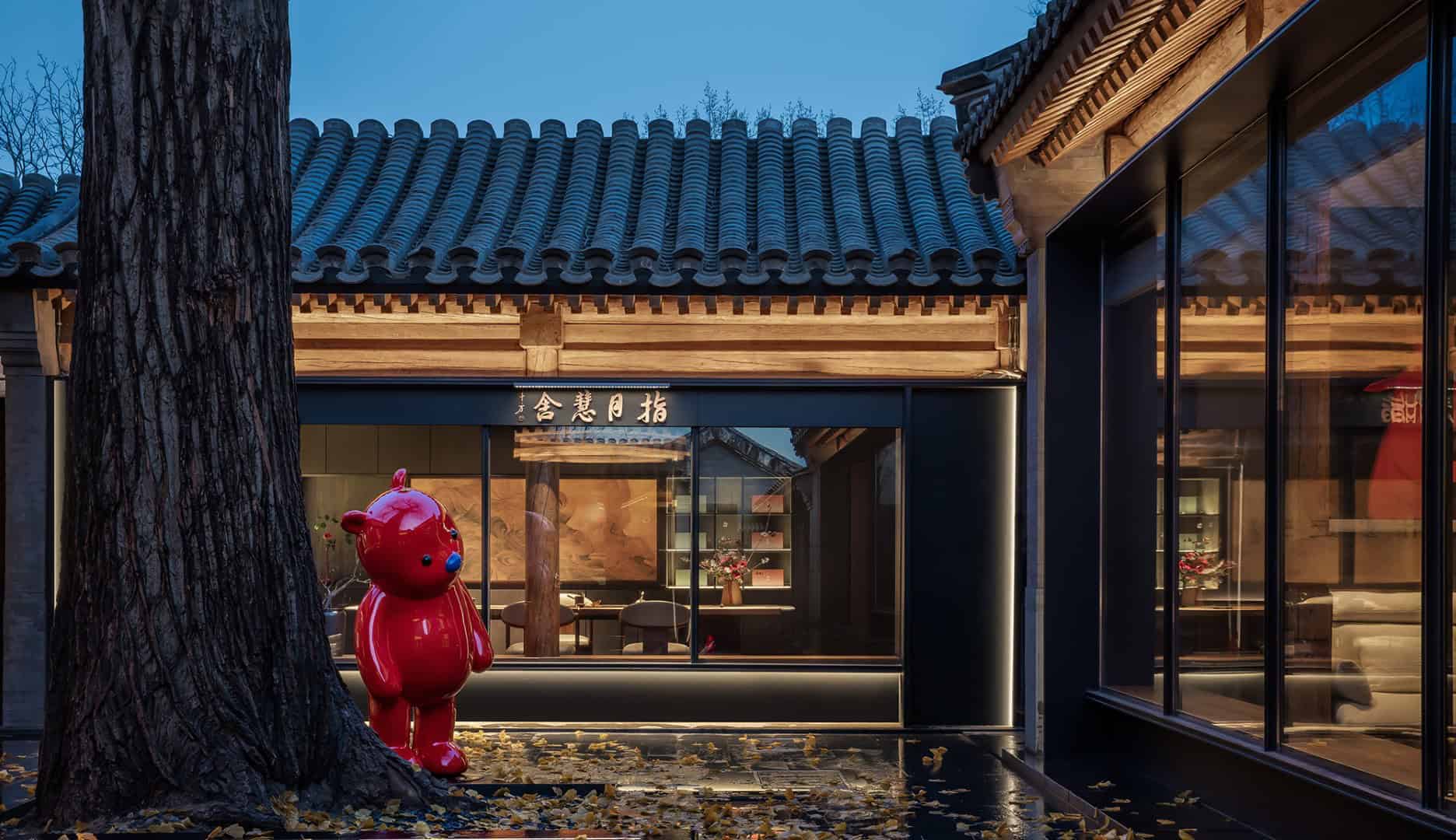
- Project: La Maison Xun
- Architect: LDH Design
- Location: China, Beilucaoyuan Hutong, Dongcheng District
- Area: 500 m2
A Courtyard Rooted in Memory and Tradition
Nestled in Beijing’s Beilucaoyuan Hutong, La Maison Xun stands as both a restaurant and a cultural statement. Conceived by Liu Daohua, the project seeks to preserve the timeless beauty of the city’s historic courtyards while infusing them with modern art and design.
Unlike many contemporary high-end restaurants, La Maison Xun embraces the simplicity and elegance of Hutong living, offering a dining experience that feels both deeply nostalgic and refreshingly contemporary. The design draws upon Beijing’s heritage of inclusiveness and resilience, honoring the spirit of place while responding to modern lifestyles.
Entering the Courtyard
Guests step through a red wooden gate into a world of grey tiled roofs, wooden eaves, black walls, and ancient trees. This entrance sequence recalls the charm of old Beijing, evoking a sense of serenity and history before the dining experience begins. Every detail—down to the bricks and tiles—acts like a verse of poetry, a cultural reminder of a Beijing that is fading from memory.
Liu Daohua describes the project not as luxury, but as a landscape that restores authenticity: an intentional retreat from excessive ornamentation, stripping the building back to its structure and revealing its historical traces.
The Balance of Old and New
La Maison Xun embodies the fusion of tradition and modernity, a theme that resonates throughout the architecture. Symmetrical layouts reflect classical Chinese philosophy of harmony between man and nature, while interiors feature contemporary art and furniture that give the courtyard a new voice.
Pieces from Derek Chen’s Maxmarko collection, works from the Chendarui series, and art by Zhang Zhanzhan enrich the environment, blending modern craftsmanship with historic setting. This integration of original artworks ensures the space feels alive, relevant, and future-oriented.
Oriental Artistic Conception
The design philosophy resists stark contrasts between past and present. Instead, Liu Daohua seeks a delicate balance, echoing Kerry Hill’s belief that harmony is more powerful than opposition. By maintaining the essence of the courtyard typology—its scale, proportions, and relationship to nature—the project creates a setting where modern aesthetics and traditional values coexist gracefully.
The result is a dining space where guests can enjoy Beijing cuisine surrounded by cultural memory: the stillness of ancient courtyards, the artistry of modern design, and the equilibrium of Eastern philosophy.
Cultural Continuity in a Modern City
In a rapidly modernizing Beijing, where steel towers and glass facades dominate the skyline, La Maison Xun offers an essential counterpoint. It is not just a restaurant but a cultural preservation project, ensuring that the memory of Hutong courtyards endures.
By blending history, artistry, and gastronomy, La Maison Xun demonstrates how design can restore continuity between past traditions and present lifestyles, creating a model for contemporary Chinese architecture that respects heritage while embracing change.


