
- Project: Kûara House
- Architect: Obra Arquitetos
- Location: Brazil, São José dos Campos
- Year: 2025
- Area: 623 m2
- Photography: Nelson Kon
A Sculptural Home Poised on the Edge of Landscape

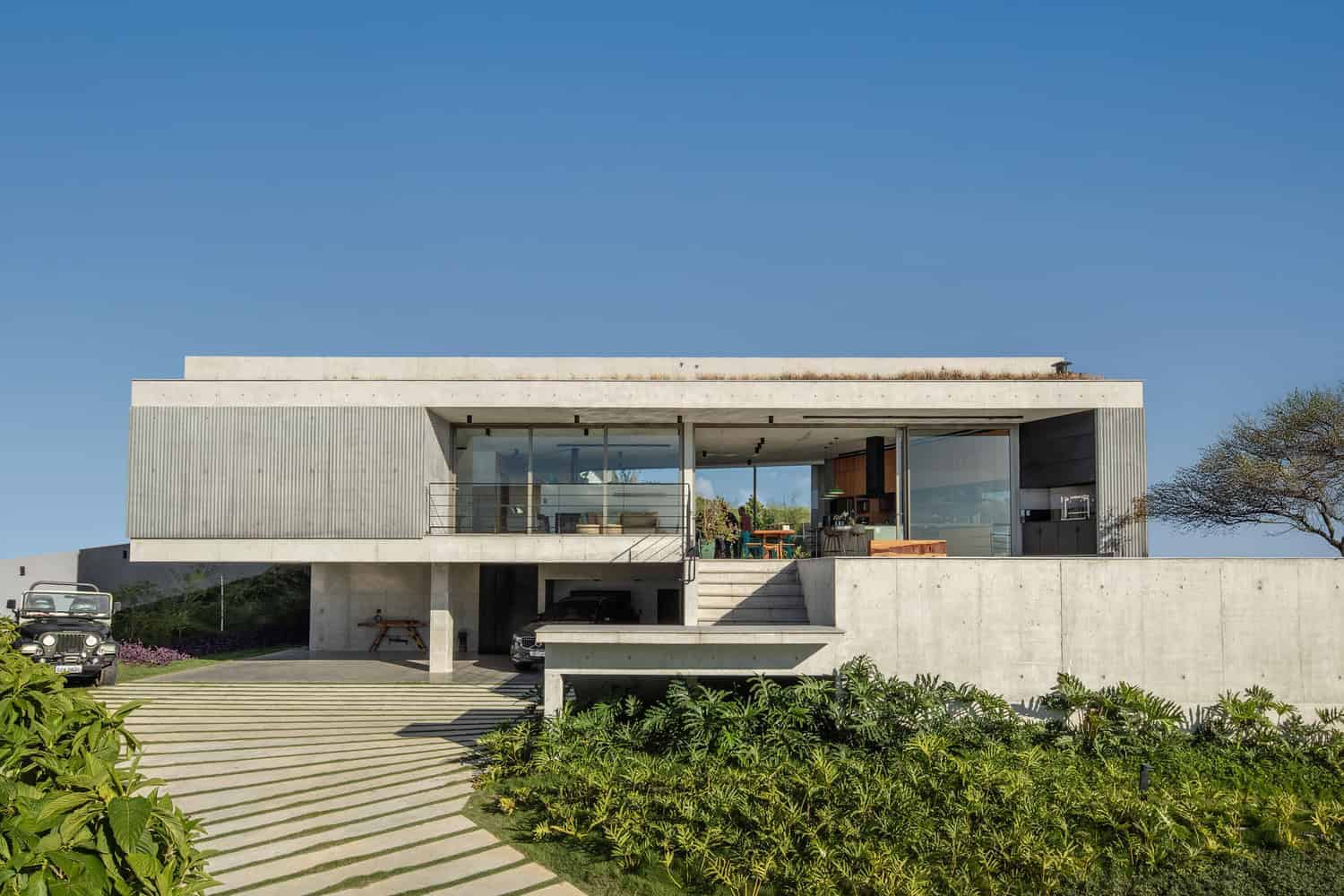
Kûara House, designed by Obra Arquitetos, marks a significant contribution to contemporary Brazilian residential architecture—a project where form, context, and experiential spatial design harmonize to create a residence of both formal elegance and practical living. Completed in 2025 atop a prominent hillside in São José dos Campos, the house engages with panoramic views of forest, city, and sky while redefining how architecture can inhabit complex terrain.
Rather than imposing itself on the landscape, Kûara House emerges from it—its geometry shaped by the irregular site, resulting in a striking L-shaped composition that responds to both topographical challenges and the aspiration for visual connection to nature.

A Geometry Informed by Context
The plan of Kûara House fits within a triangular site, with its wings resolving into an L shape that subtly orchestrates privacy, flow, and exposure. The shorter wing, oriented toward the street, houses the social heart of the residence on the upper level, creating an inviting threshold for visitors and residents alike.

The longer wing contains a sequence of private spaces—bedrooms and circulation zones—that culminate in an intimate garden and a staircase ascending to an elevated office. These sequences not only organize daily functions efficiently but establish a rhythmic procession through light, shade, and landscape.

Architectural Expression Anchored in Material Presence
The material language of Kûara House is decisive yet restrained, privileging exposed concrete and refined structural elements that lend solidity and visual coherence throughout the composition. The building’s massing partially embeds into the ground, while dramatic overhangs—supported by slender columns—gesture toward the horizon, balancing heaviness with visual lightness.

This thoughtful use of concrete not only ensures durability but also establishes a tactile richness that resonates with the surrounding terrain. The inherent texture and tonal variation of the material engage with daylight, creating nuanced shadows and enhancing the spatial experience from sunrise to sunset.

A Spatial Narrative of Inside-Out Living
Inside Kûara House, spatial sequences prioritize openness, natural light, and fluid connections to the outdoors. Floor-to-ceiling glazing frames views of forest and urban edges, dissolving the boundary between interior and exterior. These openings not only invite light deep into the plan but also animate the interiors with changing weather and seasons.

The internal layout emphasizes a seamless flow between living, dining, and outdoor garden spaces, while private areas retain a quiet introspection. Each room negotiates its relationship with the exterior—some embracing expansive views, others maintaining a meditative retreat.

Courtyards and Gardens as Spatial Catalysts
A defining feature of Kûara House is its integration of courtyards and planted voids. The empty space within the L-shaped plan becomes a central garden, anchoring the residence with greenery that softens architectural form and enhances microclimatic comfort. The landscape design, developed by La Casona Garden (lacasonagarden.com), reinforces the project’s dialogue with nature—carefully choreographing vegetation, scale, and openness to complement the architecture rather than compete with it.

These planted interstices function as spatial catalysts, inviting daylight into deep interior zones and providing visual relief. Outdoor spaces become extensions of living areas, reinforcing a lifestyle rooted in nature and outdoor conviviality.
Reimagining Modern Living in Brazil
Kûara House stands as a testament to how contemporary architecture can respond sensitively to context, climate, and lifestyle. Obra Arquitetos’ design demonstrates an adept balance between sculptural form and functional spatial planning—crafting a residence that embraces panoramic beauty without sacrificing privacy or programmatic clarity.
With its refined material palette, thoughtful spatial composition, and seamless indoor-outdoor relationships, Kûara House contributes a compelling narrative to Brazil’s evolving architectural discourse—one that is both rooted in place and attuned to the aspirations of modern living.


