
- Project: Jiangnan House Yangzhou Guangling
- Architect: B.L.U.E. Architecture Studio
- Location: China, Yangzhou, Jiangsu Province
- Year: 2025
- Area: 4250 m2
- Photography: XIA ZHI Pictures
A Landmark Urban Renewal in Yangzhou
Set in the historic Guangling district of Yangzhou, Jiangnan House Yangzhou Guangling stands as a flagship project in the city’s first wave of urban renewal. Once home to the beloved Subei Cinema, the site has been reimagined into a hotel complex that bridges past and present. By retaining the cultural fabric while adapting to new functions, the project embodies the city’s ambition: revitalize heritage while creating contemporary spaces for living and hospitality.
The Cinema Becomes a Hotel Lobby
The heart of the hotel is its lobby—once the auditorium of the Subei Cinema. B.L.U.E. Architecture Studio’s design celebrates this cinematic past while adapting the space for modern use.
-
Preservation: The original timber roof trusses remain exposed, a striking reminder of the cinema’s structure.
-
Cultural layering: A cinema screen has been preserved, anchoring the new hotel in its historic identity.
-
Garden inspiration: A central tree pond and indoor corridor draw from Yangzhou’s classical gardens, blurring boundaries between interior and exterior.
-
Materiality: Aged elm wood, natural stone flooring, and sawtooth oak veneer evoke the atmosphere of the old town, while terrazzo and vintage metal details recall the cinema’s 20th-century character.
Local artists were invited to reinterpret scenes once screened at Subei Cinema, reintroduced through woodblock prints and carvings—a poetic homage to Yangzhou’s cultural memory.
New Buildings: Gardens Reimagined
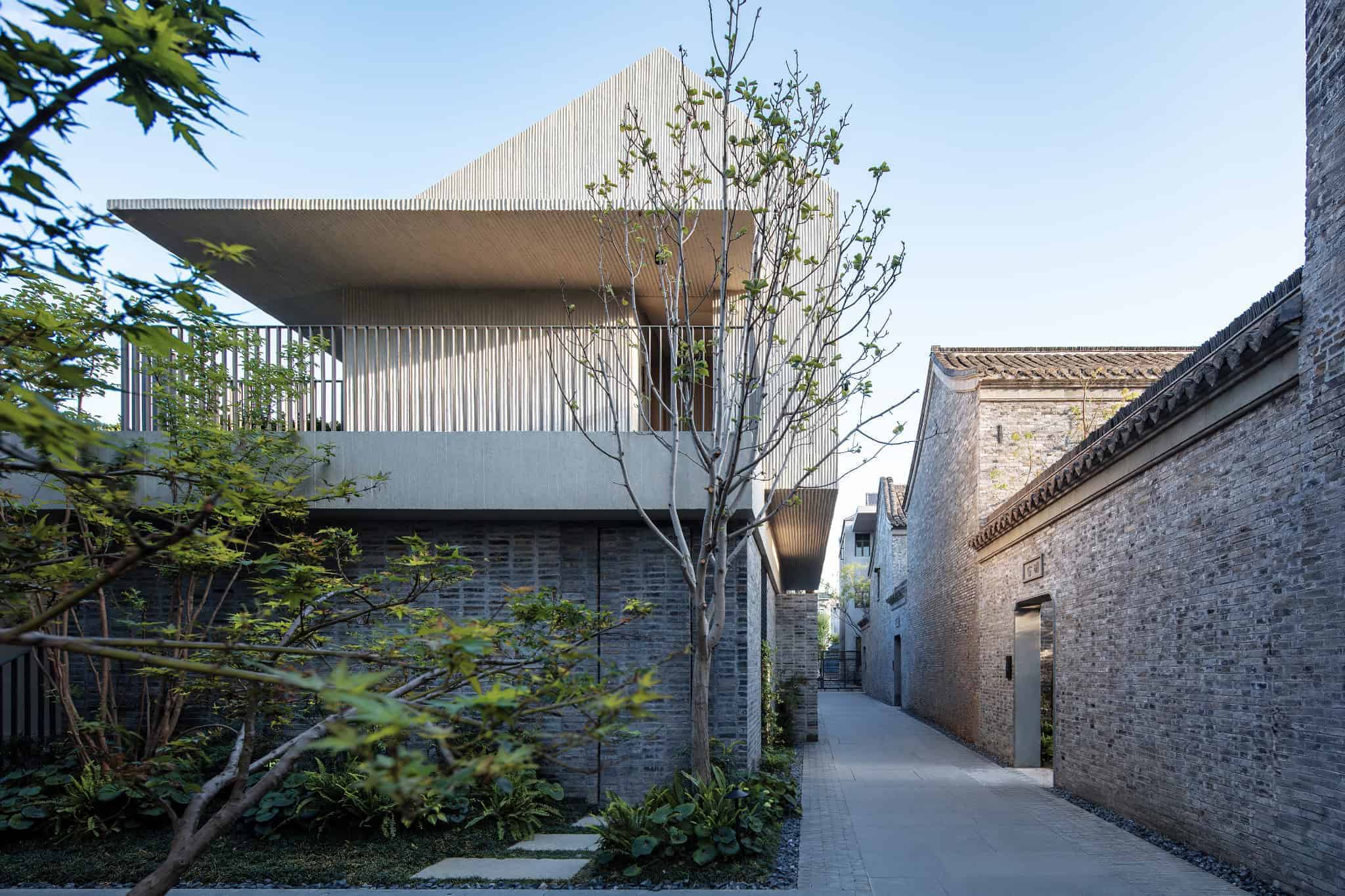
Two new buildings expand the site’s functions with guest rooms, a restaurant, and a sauna. Their design draws on the imagery of Yangzhou gardens—pavilions, terraces, and corridors that shape spatial movement.
-
Tower-Inspired Guest Rooms: Elevated and cantilevered, the second-floor guestrooms offer expansive views while recalling the silhouette of Yangzhou’s towers.
-
Materiality: Bamboo mold concrete, recycled grey brick, and slate tile combine modern construction with the tactile quality of traditional courtyards.
-
Sauna & Spa: A semi-transparent brick wall shields the spa’s private courtyard. Folding doors and sliding windows allow the interior to open fully to the garden, creating a fluid, nature-infused bathing experience.
Guest Rooms: Memory Meets Modern Comfort
The hotel features 40 guestrooms, designed as a balance between historic preservation and modern hospitality.
-
Cultural heritage building rooms: Timber structures and facades were preserved, while discreetly integrating heating, cooling, and en-suite bathrooms.
-
Design approach: Minimalist layouts emphasize comfort and openness while maintaining the warmth of natural materials—wood, stone, textured plaster, handmade bricks, and laminated glass.
-
Craft integration: Hand-hewn wood panels, distressed copper sheets, and local woodblock prints reference Yangzhou’s artisanal traditions.
Renovations of Building 2# and Building 7# retained original facades, enhanced with metal grilles, potted plants, and vertical greenery. This not only improves the environmental quality of corridors but reinforces the dialogue between heritage and modernity.
A Model for Cultural Preservation in Hospitality
Jiangnan House Yangzhou Guangling is more than a hotel—it is an architectural narrative of Yangzhou’s layered history. Through sensitive preservation, adaptive reuse, and contemporary hospitality design, the project redefines what it means to stay in an ancient city.
By weaving together the past and present, the design establishes the hotel as both a cultural destination and a living archive of Yangzhou’s urban memory.


