
- Project: Columbia River Valley Lookout
- Architect: Twobytwo Architecture Studio
- Location: Canada, Golden, British Columbia
- Year: 2023
- Area: 228 m2
- Photography: Hayden Pattullo
A Contemporary Cabin in the Sky
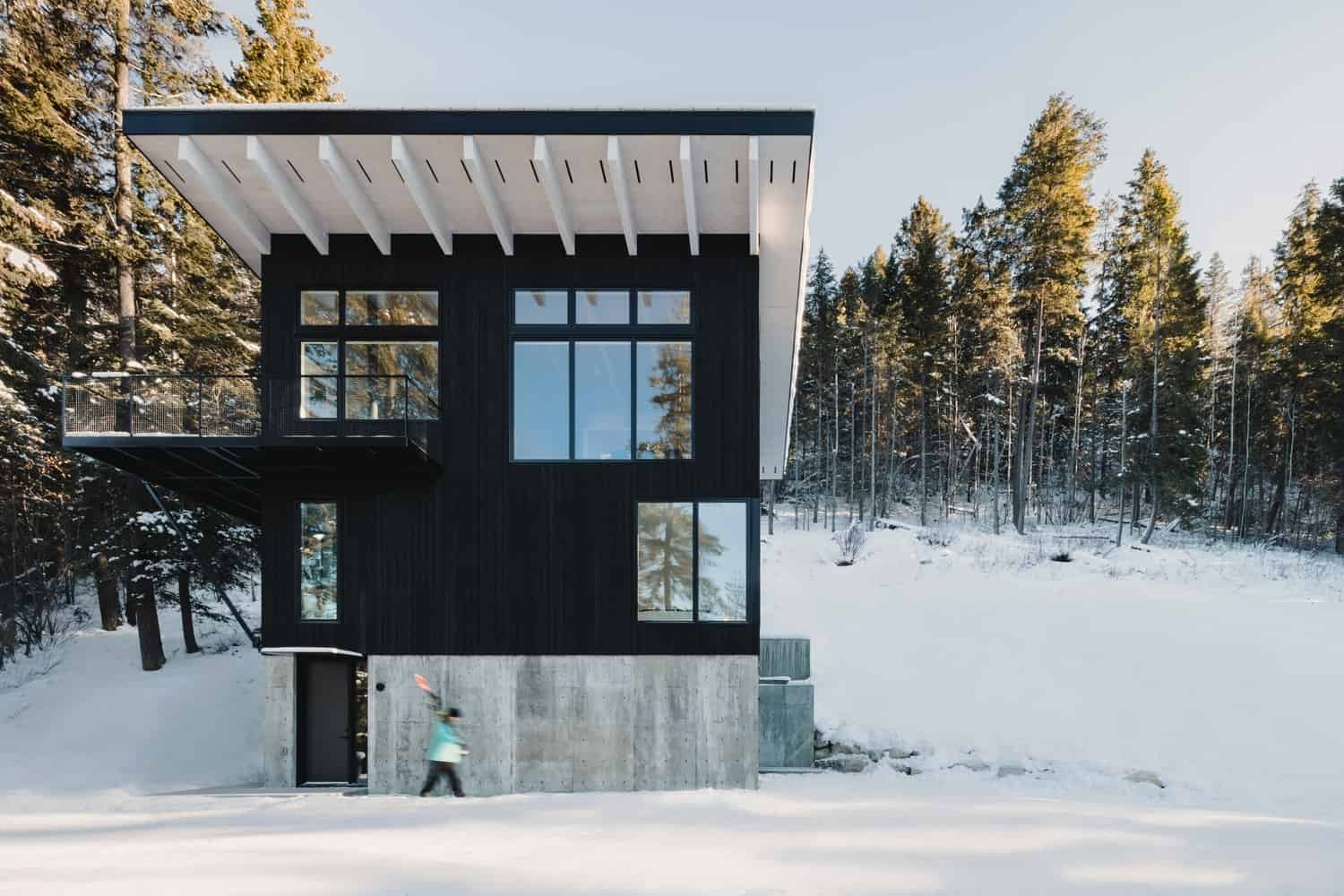
Perched on a steep forested slope above Golden, British Columbia, the Columbia River Valley Lookout by Twobytwo Architecture Studio captures the vast drama of the Canadian Rockies while remaining humbly embedded in its surroundings. The house is both lookout and retreat — a compact mountain residence where raw nature and refined design coexist in quiet balance.
At first sight, the structure appears to hover among treetops. Its slender steel supports and concrete base lift it above the rugged terrain, while expansive glass walls open the interior to uninterrupted views of the Columbia River Valley. Designed as a year-round family getaway, the home embraces the spirit of a modern alpine refuge — minimal, efficient, and deeply connected to its landscape.
Concept and Form
The architecture begins with a simple idea: elevation as connection. By raising the home above grade, the architects could preserve the natural slope, capture light from multiple orientations, and align daily life with the horizon rather than the forest floor.
The project is organized into three levels that step with the terrain:
-
Ground Level: A concrete plinth containing garage, utility rooms, and gear storage.
-
Middle Level: The bedroom floor — intimate, enclosed, and shaded by the upper canopy.
-
Top Level: An open living, dining, and kitchen volume designed as a panoramic pavilion.
This inverted plan — with social life placed highest — turns the traditional mountain cabin inside out. Instead of retreating into the slope, the upper floor opens outward, treating the forest and valley as integral parts of the architecture.
Material and Expression
Materiality at Columbia River Valley Lookout balances resilience with warmth. The lower podium is cast in concrete, anchoring the building physically and thermally. Above it, the upper volumes are wrapped in blackened vertical wood siding, a finish chosen to merge visually with the trunks of surrounding pines and firs.
Large panes of glass frame the landscape while maintaining a precise rhythm between transparency and solidity. The structure’s crisp geometry is softened by the texture of timber, the sheen of metal, and the play of mountain light across surfaces.
Inside, the palette reverses: Douglas fir rafters, polished concrete floors, and white walls create a bright, calm backdrop for shifting shadows and views. The interiors are intentionally restrained — a space defined not by objects but by the changing light of the day.
The Balcony as Horizon
Perhaps the most defining gesture is the cantilevered steel balcony that extends beyond the main living volume. Hovering above the valley, it transforms the act of stepping outside into an experience of immersion — air, wind, and altitude.
The balcony is both a structural and emotional device: a physical extension of the interior space and a psychological threshold between shelter and wilderness. Its thin steel plate structure, detailed with minimal railings, captures the studio’s precision-driven design ethos.
Interior Experience
Within, the home feels intimate yet expansive. The open-plan living area is defined by high ceilings, exposed beams, and a seamless connection to the outdoors. A linear fireplace and simple furniture layout emphasize horizontality — a deliberate contrast to the verticality of the forest outside.
On the bedroom floor below, spaces are organized with privacy and retreat in mind. Windows are carefully placed for filtered morning light and glimpses of the forest canopy. The circulation is simple, direct, and tactile — wood, concrete, and glass in honest dialogue.
Relationship to Landscape and Climate
Set within a mountain microclimate prone to snow and wind, the home’s envelope and form are finely tuned for durability and performance. The steeply pitched roof sheds snow efficiently, while deep overhangs shade summer sun and protect glazing from rain.
By elevating the main volume, the house minimizes its impact on the site, allowing water, wildlife, and vegetation to continue naturally below. The surrounding terrain has been carefully reforested with native species, allowing the architecture to age alongside the ecosystem it inhabits.
This is a house that breathes with its landscape: radiant concrete floors store passive heat, and operable windows promote cross-ventilation even at altitude.
Architecture as Observation
Every surface, line, and view in the Columbia River Valley Lookout reinforces the home’s dual purpose — to shelter and to reveal. The structure is at once minimal and monumental, a framing device for nature that blurs the line between object and environment.
Twobytwo Architecture Studio’s design embodies a distinctly Canadian sensibility: robustness without heaviness, precision without coldness, modernity rooted in landscape. It’s a house not only to look out from, but to dwell in awareness of what surrounds it — weather, light, distance, and silence.
A Quiet Manifesto
The Columbia River Valley Lookout demonstrates how contemporary mountain architecture can be both bold and deferential. By combining modern construction with vernacular sensitivity, Twobytwo redefines the alpine cabin for the present age — as a structure that respects the land, celebrates simplicity, and elevates everyday life to the level of the view itself.


