
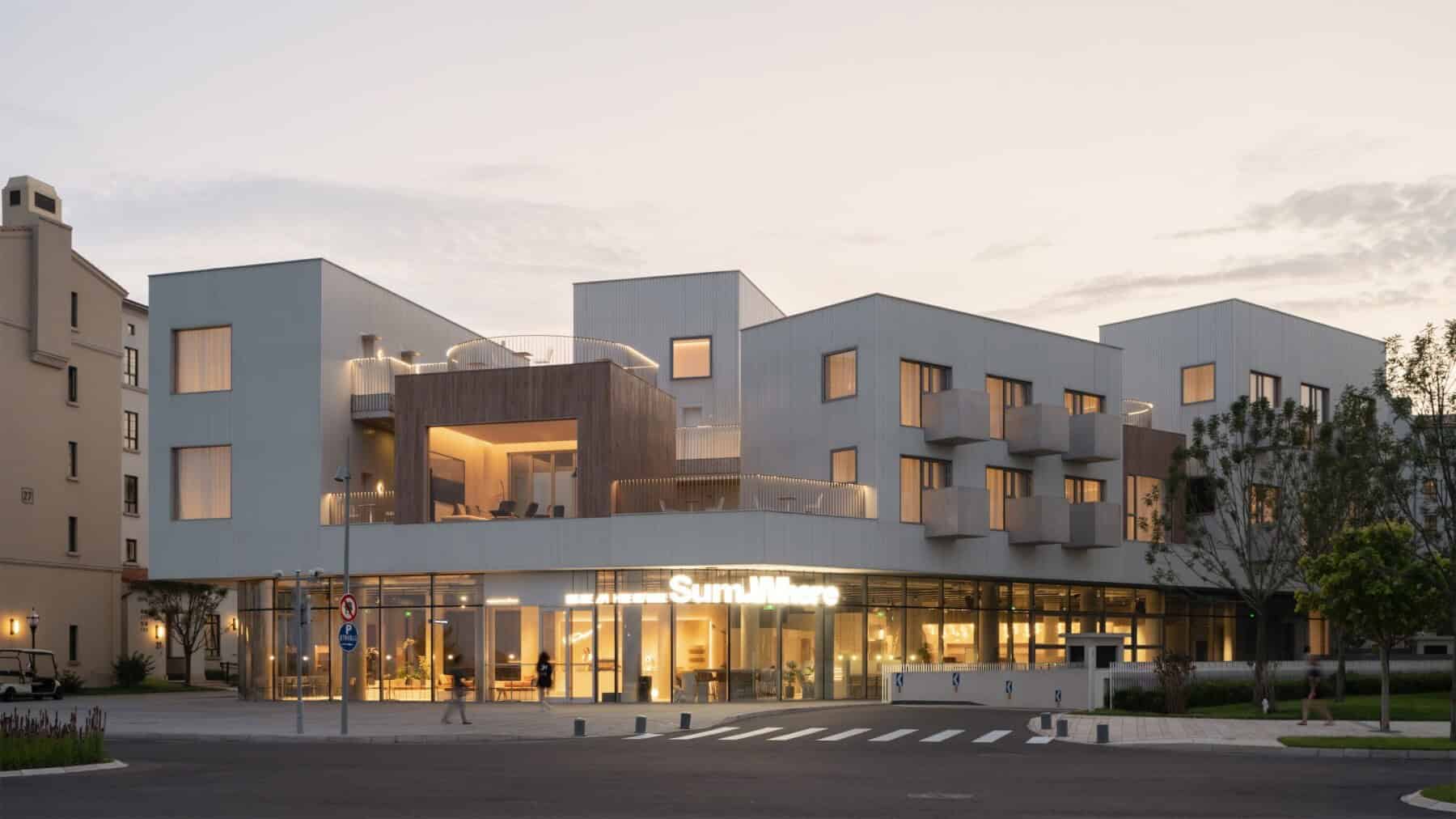
- Project: Aranya theTANG Hotel
- Architect: B.L.U.E. Architecture Studio
- Location: China, Qinhuangdao
- Year: 2021
- Area: 1350 m2
- Photography: Eiichi Kano
A Hotel Shaped by Site and Community
Located within the culturally rich Aranya community in Qinhuangdao, the Aranya theTANG Hotel occupies a hexagonal site framed by European-style residences. To the east, the hotel opens toward sweeping views of the Golden Coast, while the other three sides enclose a plaza-like condition reminiscent of small European town squares.
B.L.U.E. Architecture Studio embraced the site’s unique geometry, envisioning a new model of inhabitation for the 21st century. Their aim: to move beyond the traditional hotel model of privacy and seclusion, instead creating a vibrant space that prioritizes community, shared experience, and emotional connection.
Rethinking the Hotel Typology
Conventional hotels emphasize the exclusivity of guest rooms. Here, B.L.U.E. sought to dissolve isolation by giving public spaces equal weight. The design encourages interaction, openness, and collective experience—turning the hotel into an urban micro-community.
Architectural Form
The building is organized as a low, enclosed complex with transparent glass curtain walls at the ground floor, housing the public lobby, café, and bar. Above this base platform rise eight irregularly scaled white volumes that accommodate the guestrooms.
-
Floating effect: Cantilevered platforms and profiled steel cladding create a sense of lightness.
-
Warm accents: Laminated bamboo panels break up the white façade, adding a natural touch.
-
Terraces: Each room includes a small outdoor terrace, reinforcing the connection between interior life and the seaside landscape.
-
Dynamic circulation: Outdoor corridors and varying building heights create shifting perspectives, from the liveliness of the plaza to expansive sea views.
The spatial composition feels less like a singular building and more like a small floating community, reinforcing the idea of neighborhood within a hotel.
Interior Spaces
Inside, the design balances minimalism with warmth.
-
Public areas: The first-floor lobby, café, and bar form a continuous flow, bathed in natural light through floor-to-ceiling glass. Minimalist finishes keep the focus on nature—the sea air, trees, and daylight.
-
Guestrooms: Suites on the ground floor cater to families, while upper levels feature compact 26 m² and loft-style 36 m² rooms. Natural materials—wood, stucco, travertine—create a calm, understated atmosphere.
-
Climate considerations: Moisture-resistant treatments and in-room dehumidifiers ensure comfort in the humid seaside environment.
-
Shared living: A second-floor communal lounge with panoramic sea views encourages socializing beyond private rooms.
By slightly compressing private room sizes, the design frees up more space for shared functions, encouraging guests to experience the hotel as a collective environment.
Toward a Shared Hotel Model
The Aranya theTANG Hotel proposes a new typology for hospitality. Instead of isolating guests in private suites, it encourages them to engage with shared courtyards, terraces, and communal rooms.
The project reflects a broader shift in urban living: as personal spaces shrink, community becomes a vital counterpart. Here, architecture becomes a platform for interaction, exploration, and emotional connection—where living extends beyond the guestroom into shared, fluid spaces.


Plans


