
Who Was Gustav Klimt?
Gustav Klimt (1862–1918) was an Austrian Symbolist painter and a founding figure of the Vienna Secession, an art movement dedicated to breaking from traditional academic styles. Born in Baumgarten near Vienna, he trained at the Kunstgewerbeschule and began his career creating murals and decorative commissions.
Klimt’s mature work focuses heavily on the female figure, eroticism, symbolism, and ornamental detail. His pursuit of artistic independence led him to create some of the most iconic paintings in Western art, balancing flat decorative surfaces with expressive psychological depth.
The “Golden Phase” Explained
Klimt’s most celebrated period—his “Golden Phase”—spans the early 1900s. Inspired by Byzantine mosaics, Japanese prints, and his own experimentation with materials, he integrated gold leaf, pattern, and mosaic-like ornament into his paintings.
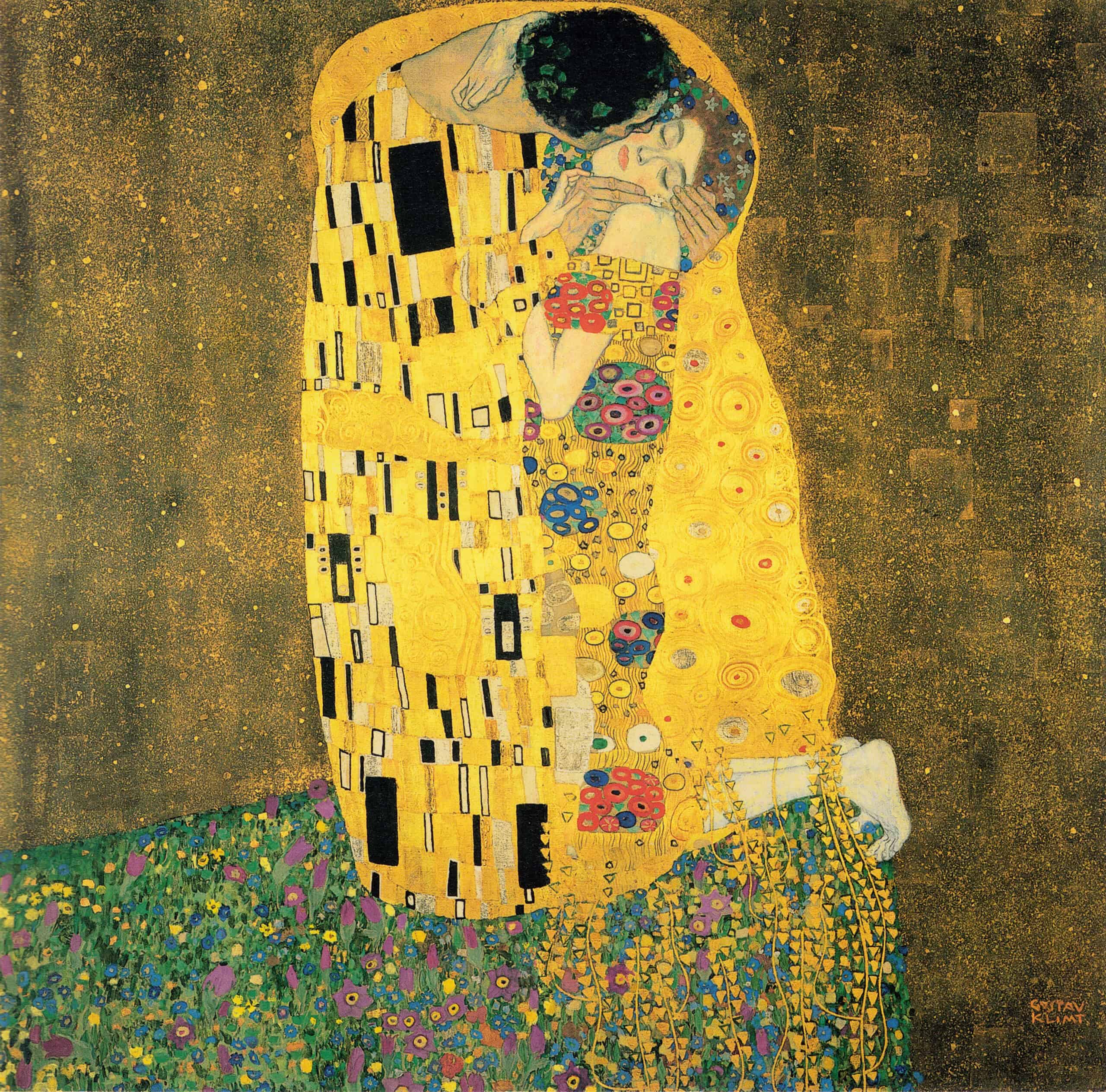
His most famous work, The Kiss (1907–08), epitomizes this era. With its gilded robes, stylized motifs, and intimate embrace, it embodies the ideals of the Secession: unity of art, design, and emotion. Today, it stands as Vienna’s most visited painting.
Beyond Gold — Allegories, Landscapes, and Murals
Allegorical Paintings
Works like Judith I, Danaë, and Death and Life explore mythology, eroticism, mortality, and the female psyche. These compositions show his mastery of symbolism and narrative depth.
Landscapes
Klimt’s landscapes, often painted around Lake Attersee, reveal a different facet of his vision—intimate, near-abstract scenes composed of shimmering color fields and dense textures.
Murals and Monumental Projects
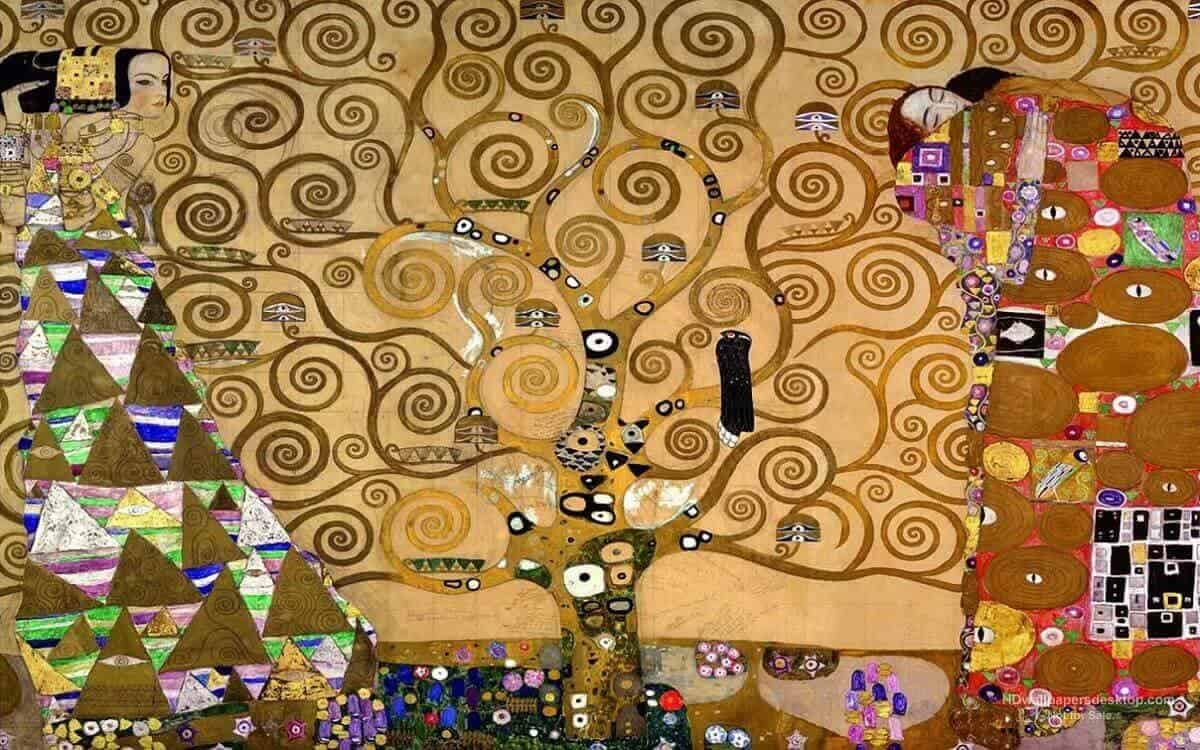
Projects such as the Beethoven Frieze and the Stoclet Frieze demonstrate his commitment to integrating art with architecture, anticipating modern notions of total design.
Where to See Klimt Today
- Upper Belvedere, Vienna — The Kiss, Judith I, major portraits.
- Secession Building, Vienna — Beethoven Frieze, permanently installed.
- Neue Galerie, New York — Portrait of Adele Bloch-Bauer I (also known as The Lady in Gold).
- Private and international collections — numerous landscapes, drawings, and late portraits.
These venues regularly feature Klimt in special exhibitions, educational programs, and digital installations.
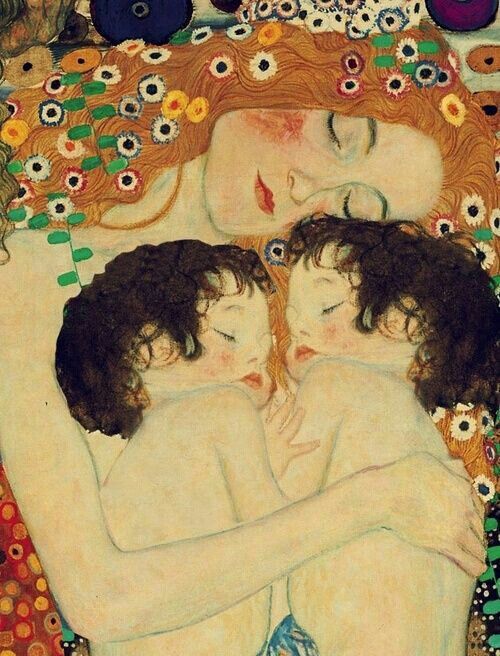
A Closer Look: The Mother and Child Detail from The Three Ages of Woman (1905)
Among Gustav Klimt’s most tender and emotionally resonant images is the intimate mother-and-children embrace from his 1905 masterpiece The Three Ages of Woman. This celebrated detail—often reproduced on its own—captures a young mother cradling two sleeping children, their bodies intertwined in a gesture of protection, warmth, and unconditional love. Rendered with Klimt’s signature ornamental patterns, soft contouring, and luminous skin tones, the scene reveals a rare gentleness within his Symbolist vocabulary.
While the full painting presents a broader allegory of life’s stages—youth, adulthood, and old age—this particular section distills the emotional center of the work. The floral halo around the mother, the rhythmic curls of the children’s hair, and the serene expressions combine to create one of Klimt’s most universally beloved images. It balances maternal intimacy with decorative elegance, offering a poetic counterpoint to his more sensual or mythological themes. Today, this detail stands as an emblem of motherhood in early modern art and highlights Klimt’s ability to navigate both psychological depth and ornamental beauty within a single composition.
Gustav Klimt’s 10 Best Paintings
-
-
The Kiss (1907–08)
The quintessential Klimt. Gold leaf, geometric patterning, and an intimate embrace create one of art history’s most iconic images. Housed at the Belvedere in Vienna.
-
-
Portrait of Adele Bloch-Bauer I (1907)
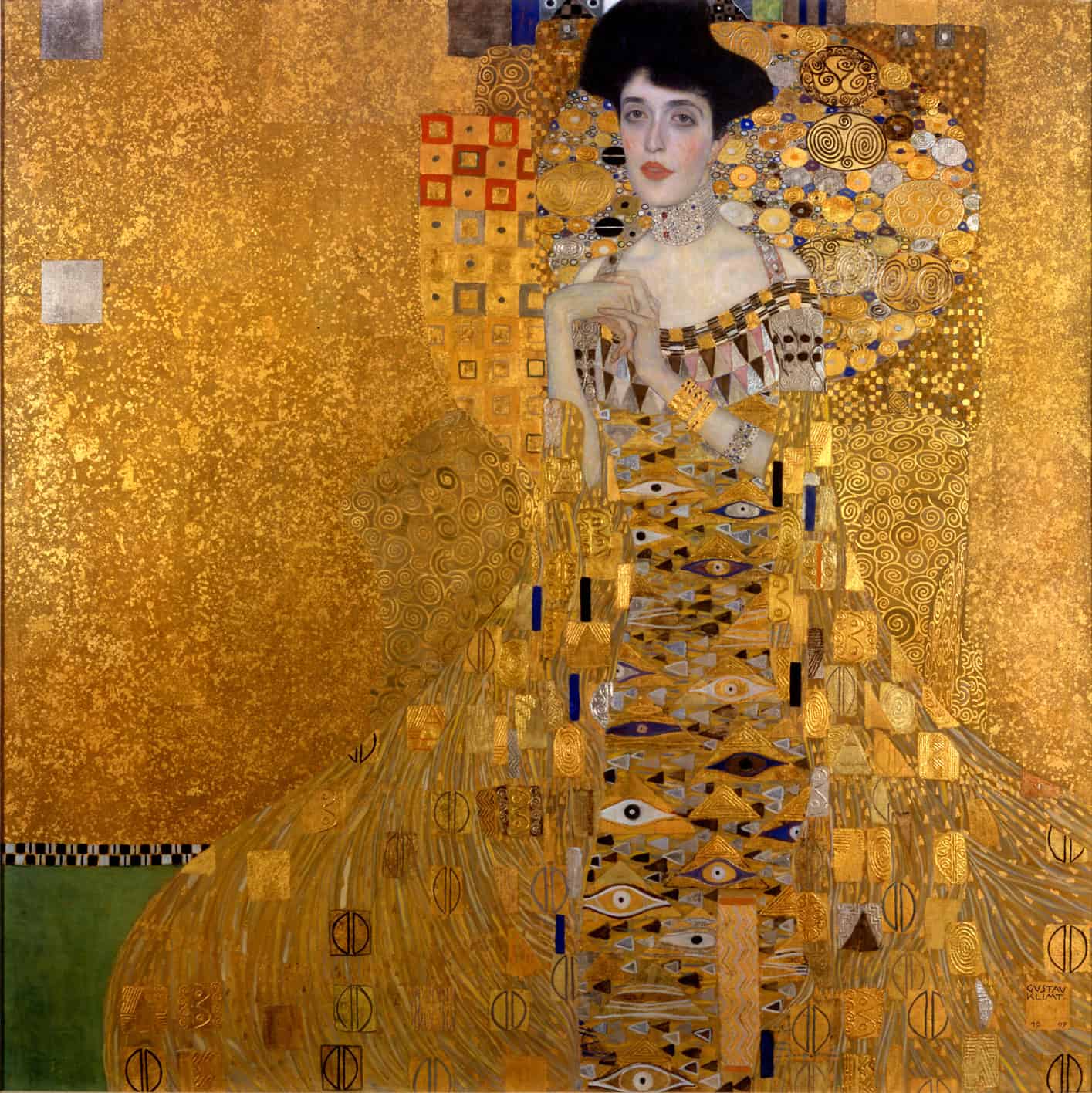
Portrait of Adele Bloch-Bauer I (1907) A lavish gold portrait of Viennese socialite Adele Bloch-Bauer. Known as “The Lady in Gold,” this painting is a symbol of Klimt’s decorative sophistication and psychological depth.
-
Lady with a Fan (1917–18)
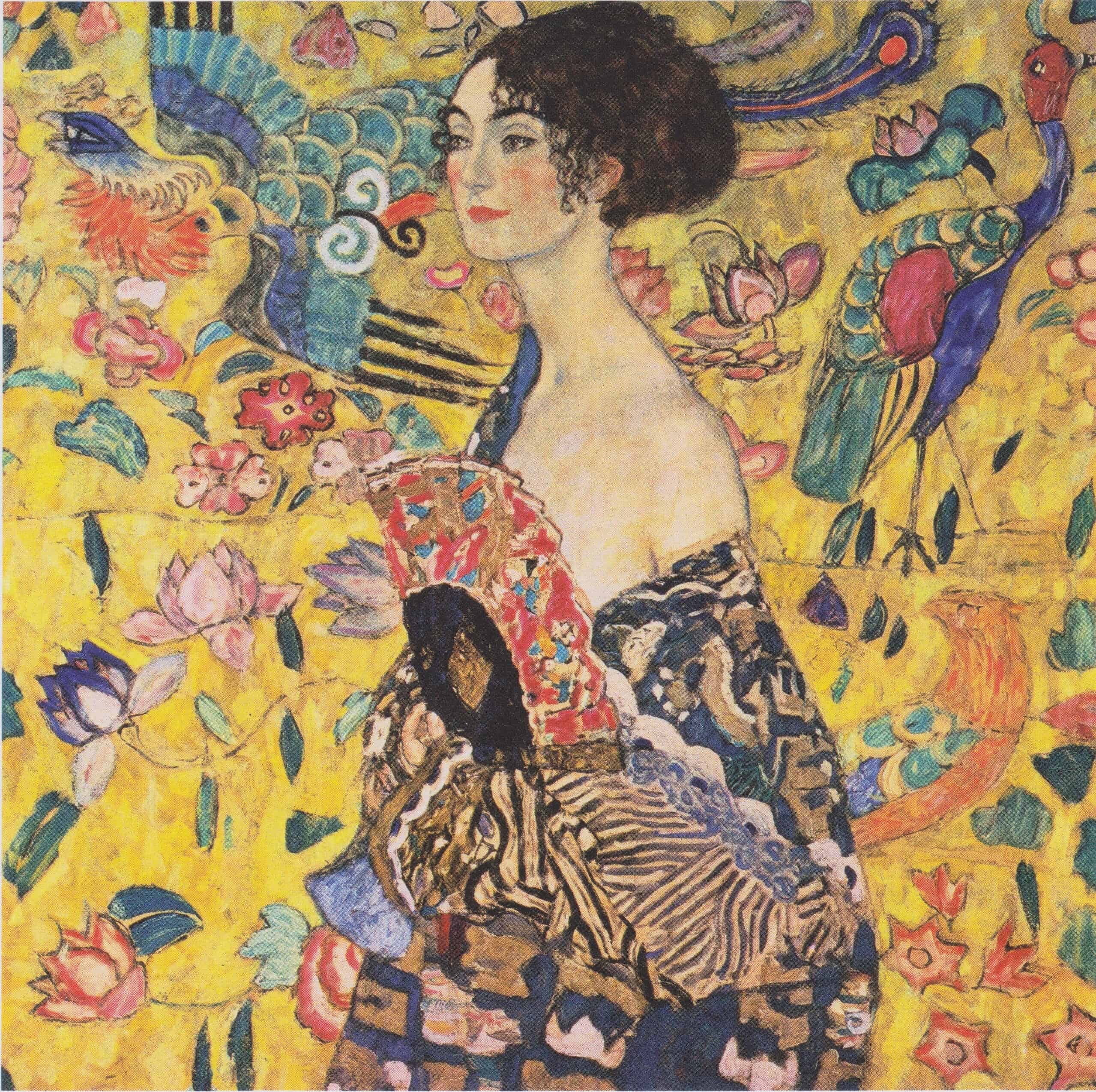
Lady with a Fan (1917–18) Klimt’s final portrait. It combines East Asian influences, vibrant color, and a freer, more expressive touch. Recently set the European auction record.
-
Judith I (1901)
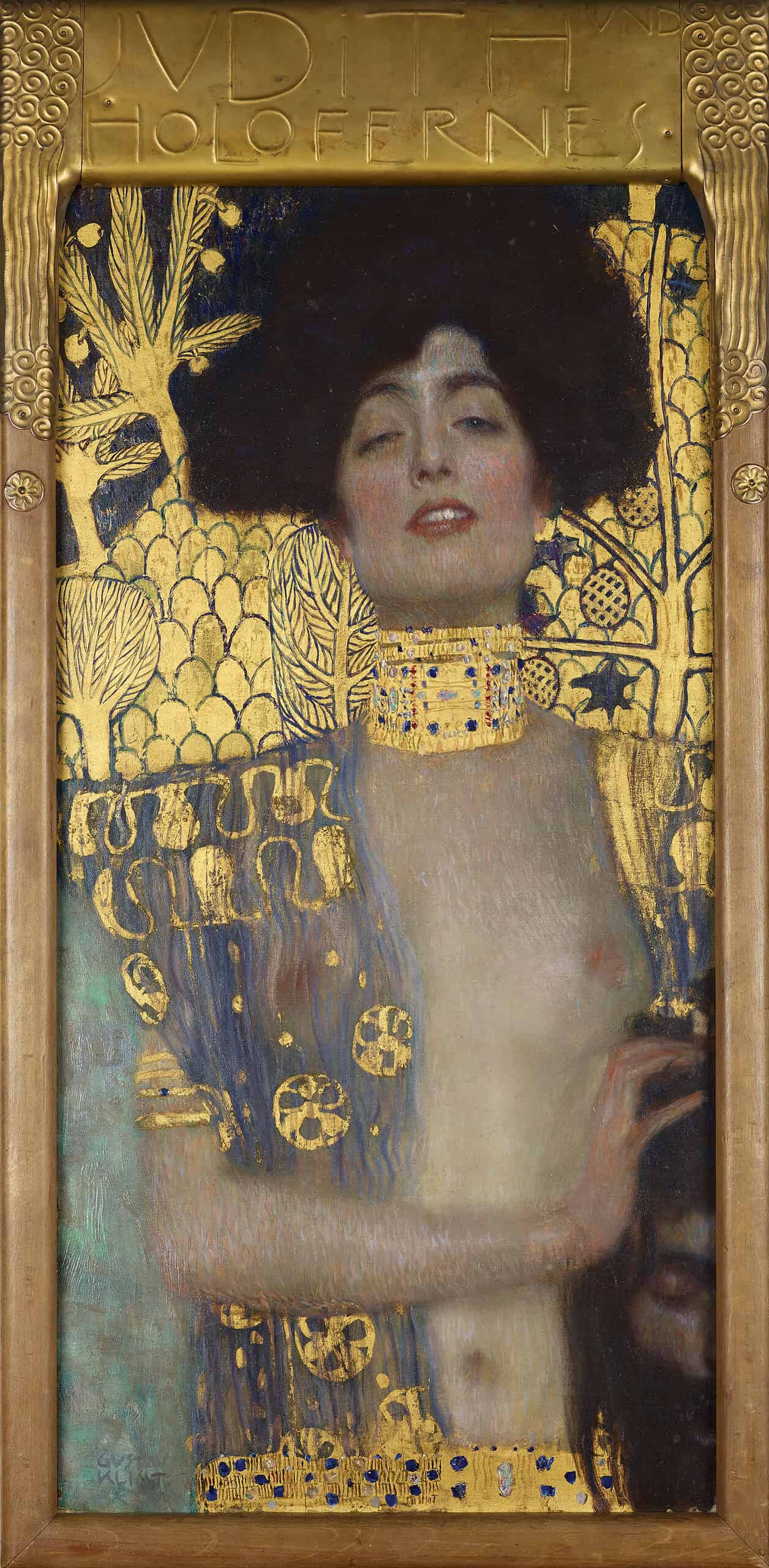
Judith I (1901) A sensual reinterpretation of the biblical heroine, blending erotic tension and symbolic motifs. One of his most striking allegories of feminine power.
-
Danaë (1907–08)
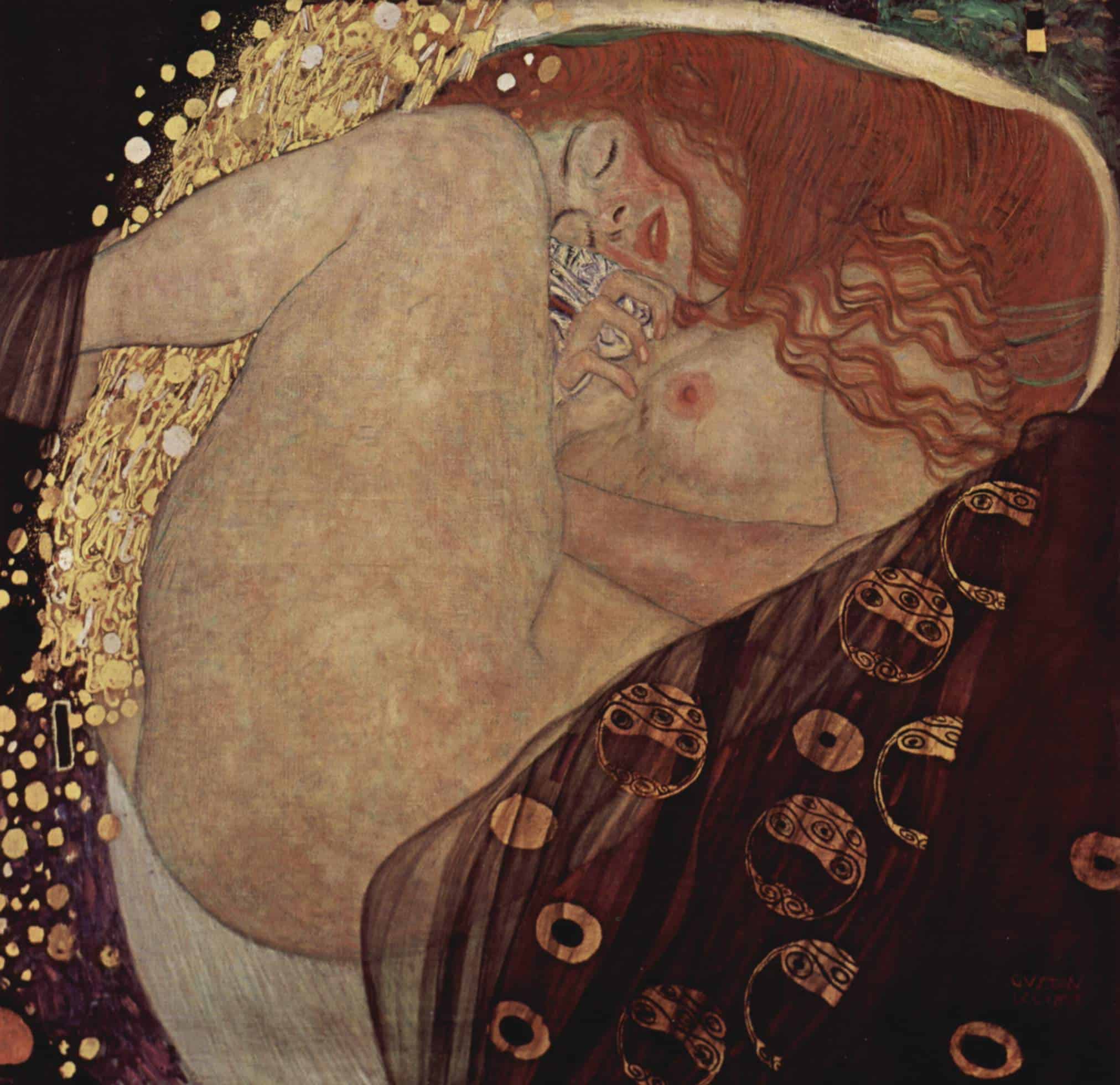
Danaë (1907–08) A mythological subject rendered with curved forms, glowing color, and intimate symbolism. A key example of Klimt’s mature allegorical style.
-
Death and Life (1908–11)
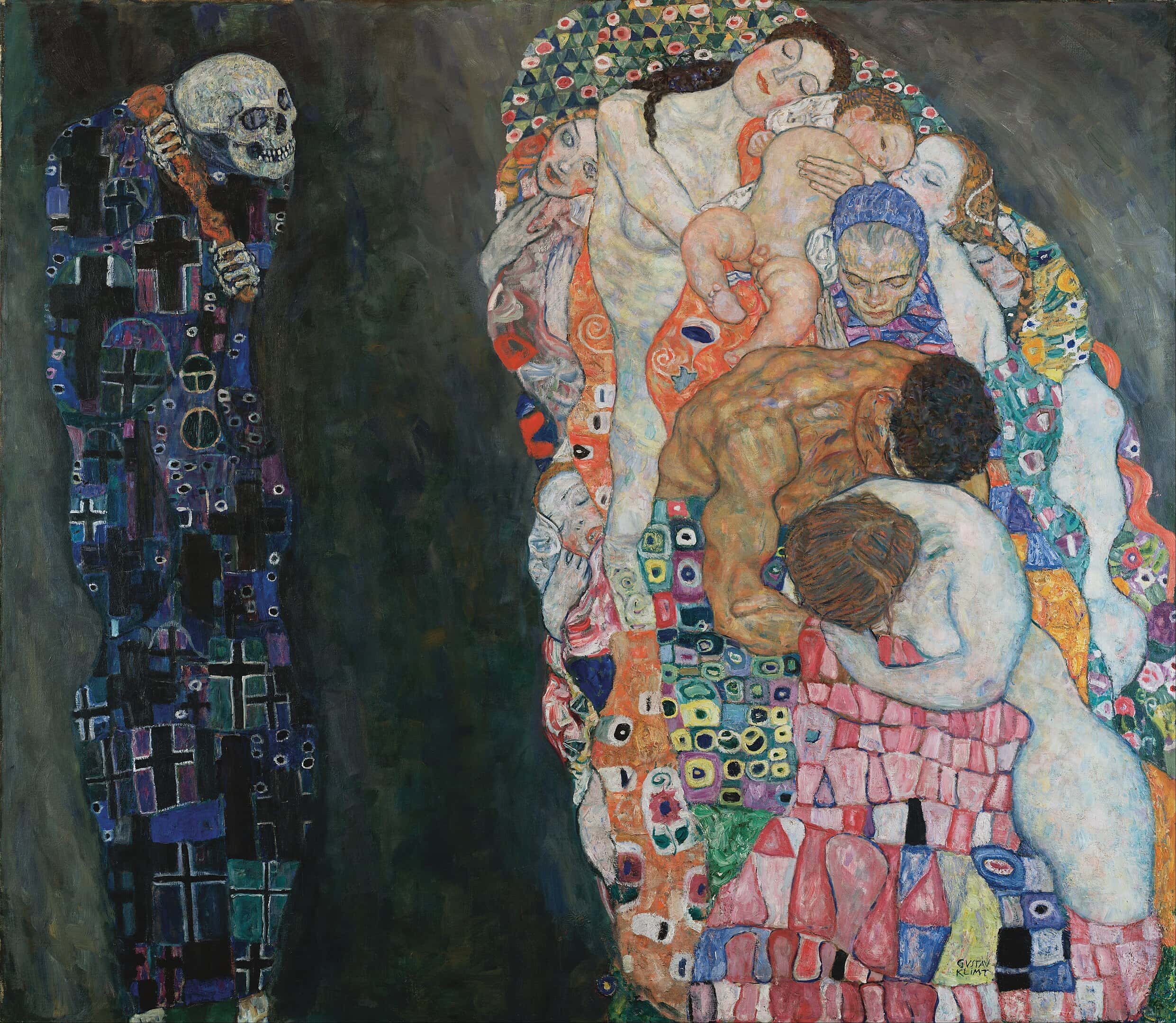
Death and Life (1908–11) An exploration of human existence. Klimt contrasts a skeletal figure of death with a vibrant cluster of intertwined bodies representing life’s diversity.
-
Water Serpents I & II (1904–07)
Water Serpents I & II (1904–07) These works celebrate movement, sensuality, and decorative rhythm, blending gold accents with fluid, aquatic-inspired forms.
-
The Tree of Life (Stoclet Frieze) (1905–11)
The Tree of Life (Stoclet Frieze) (1905–11) A monumental decorative panel created for the Palais Stoclet. Spiraling branches and mosaic-like surfaces showcase Klimt’s mastery of ornamental design.
-
Lake Attersee (c. 1900)
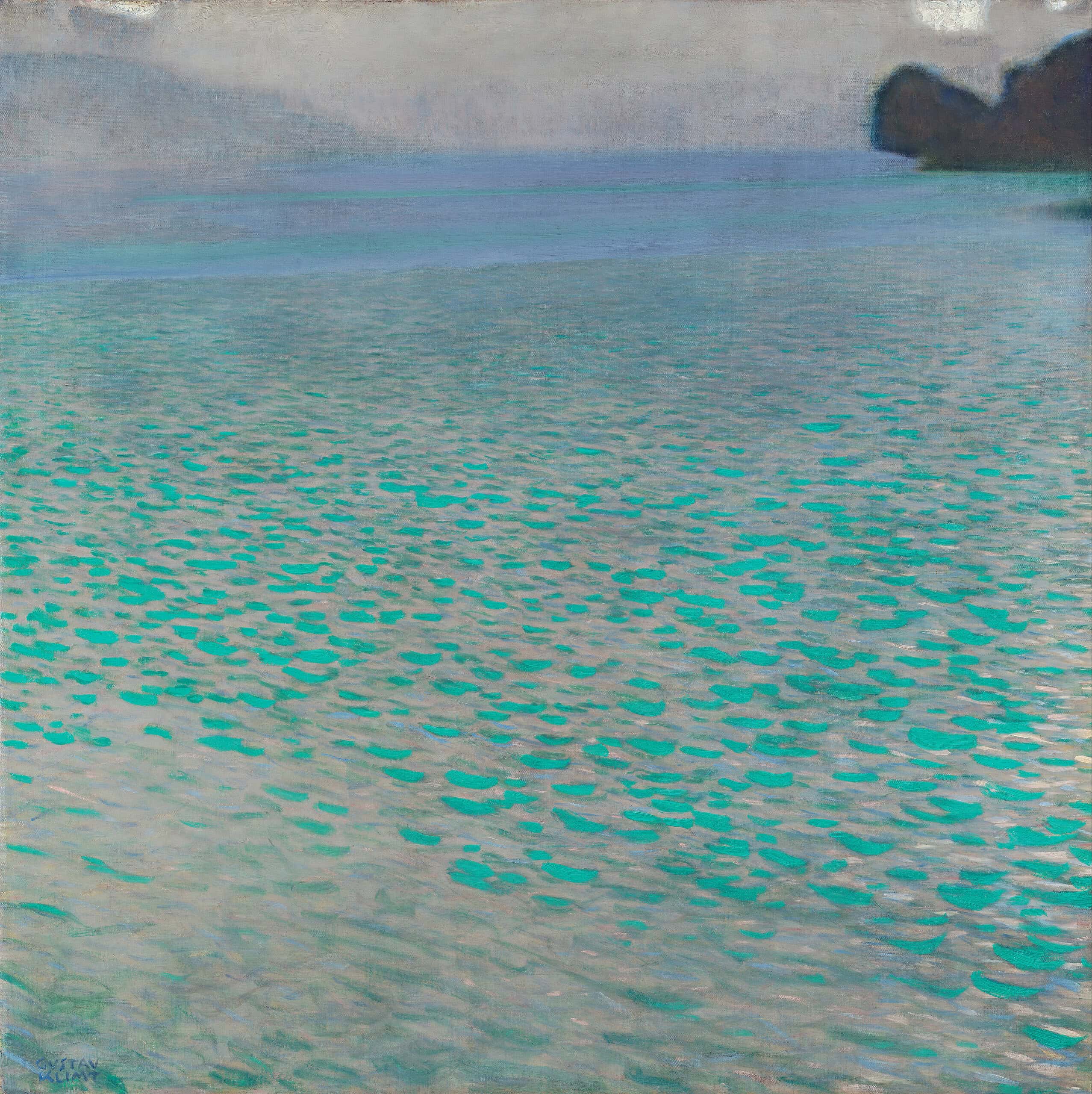
Lake Attersee (c.1900) One of his luminous landscapes. Almost abstract in its color and texture, this work reveals Klimt’s sensitivity to nature and atmosphere.
-
Beethoven Frieze (1902)
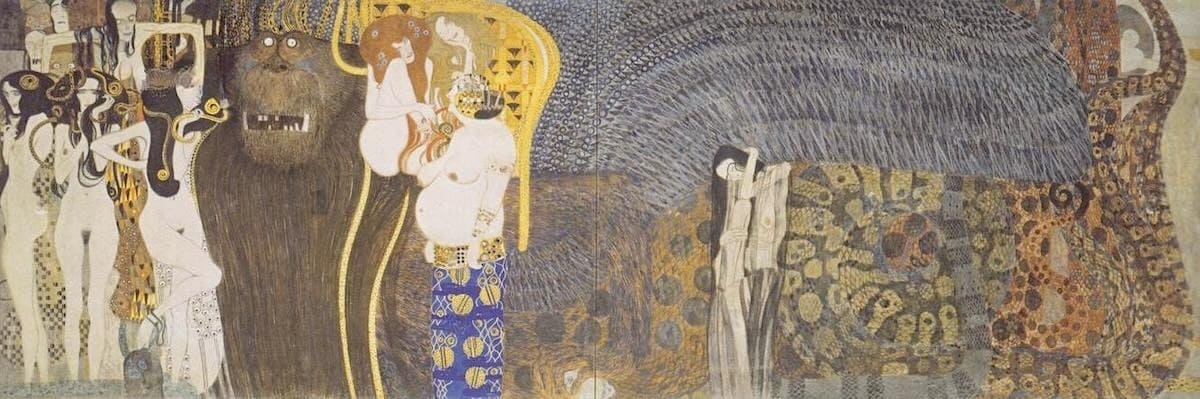
Beethoven Frieze (1902) A large-scale mural cycle created for the 14th Vienna Secession exhibition. A celebration of artistic unity and the human search for happiness.
Style DNA — What Makes a Klimt a Klimt
- Extensive use of gold leaf and metallic surfaces
- Decorative patterning inspired by Byzantine art and Japanese prints
- Sensual, often erotic depictions of women
- Flatness contrasted with expressive human faces and hands
- Symbolism embedded in ornament
- Integration of painting, design, and architecture
These elements create the unmistakable visual language that defines Klimt’s lasting influence.
The Market & Legacy
Klimt remains one of the most valuable artists on the global market. His works routinely achieve record-breaking prices, and demand continues to rise among collectors and institutions. Exhibitions, special programming, and cultural references keep his art at the center of public fascination.
From the gold-laden masterpieces to the shimmering landscapes, Klimt’s legacy bridges fine art, design, and cultural mythology—making him a perennial icon.
FAQs
Why is The Kiss so famous?
Its gold composition, emotional intimacy, and impeccable design typify Klimt’s Golden Phase and the ideals of the Vienna Secession.
Where can I see the Beethoven Frieze?
The original mural is permanently installed in the Secession Building in Vienna.
Did Klimt only paint gold portraits?
No. He also created landscapes, allegories, drawings, and murals, many of which do not use gold leaf.
References & Further Reading
- Belvedere Museum
- Vienna Secession
- Neue Galerie New York
- Major art historical publications
